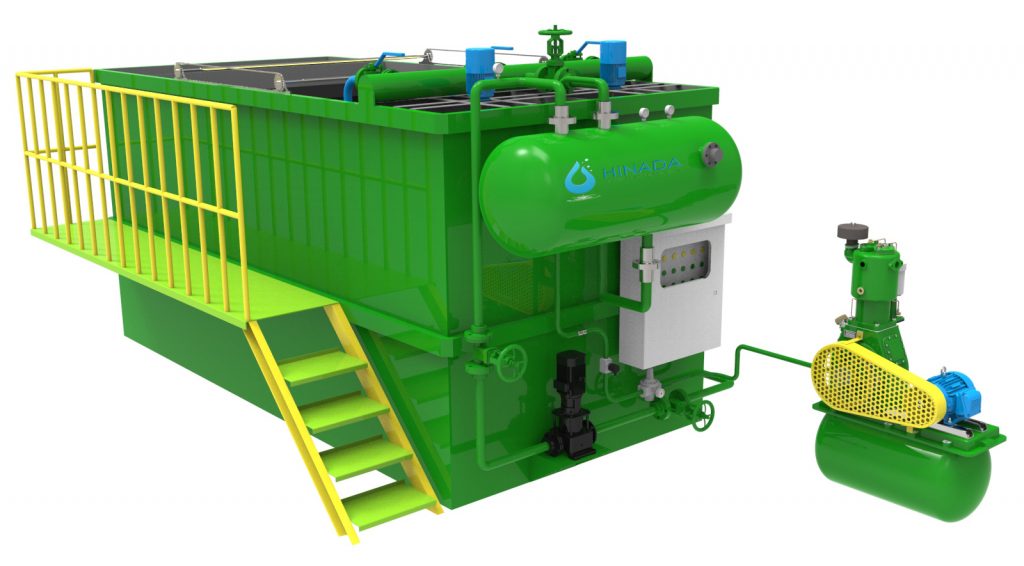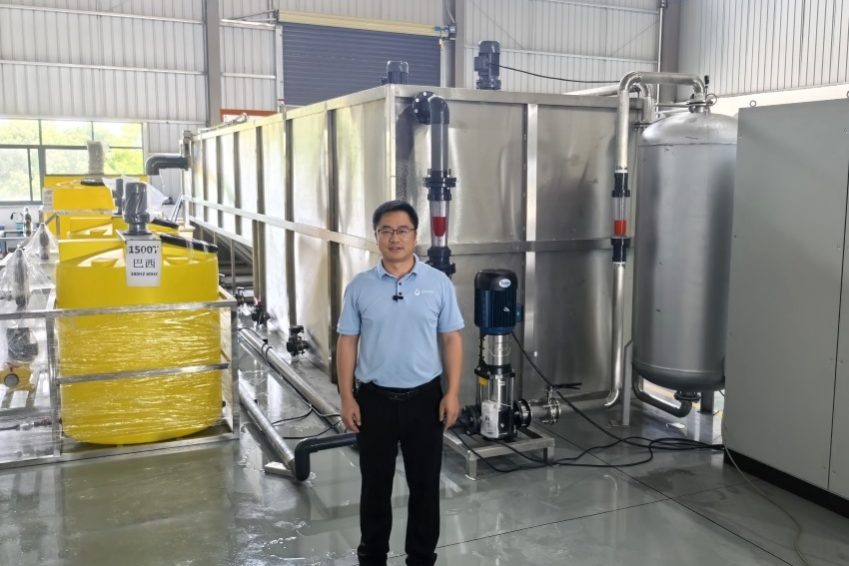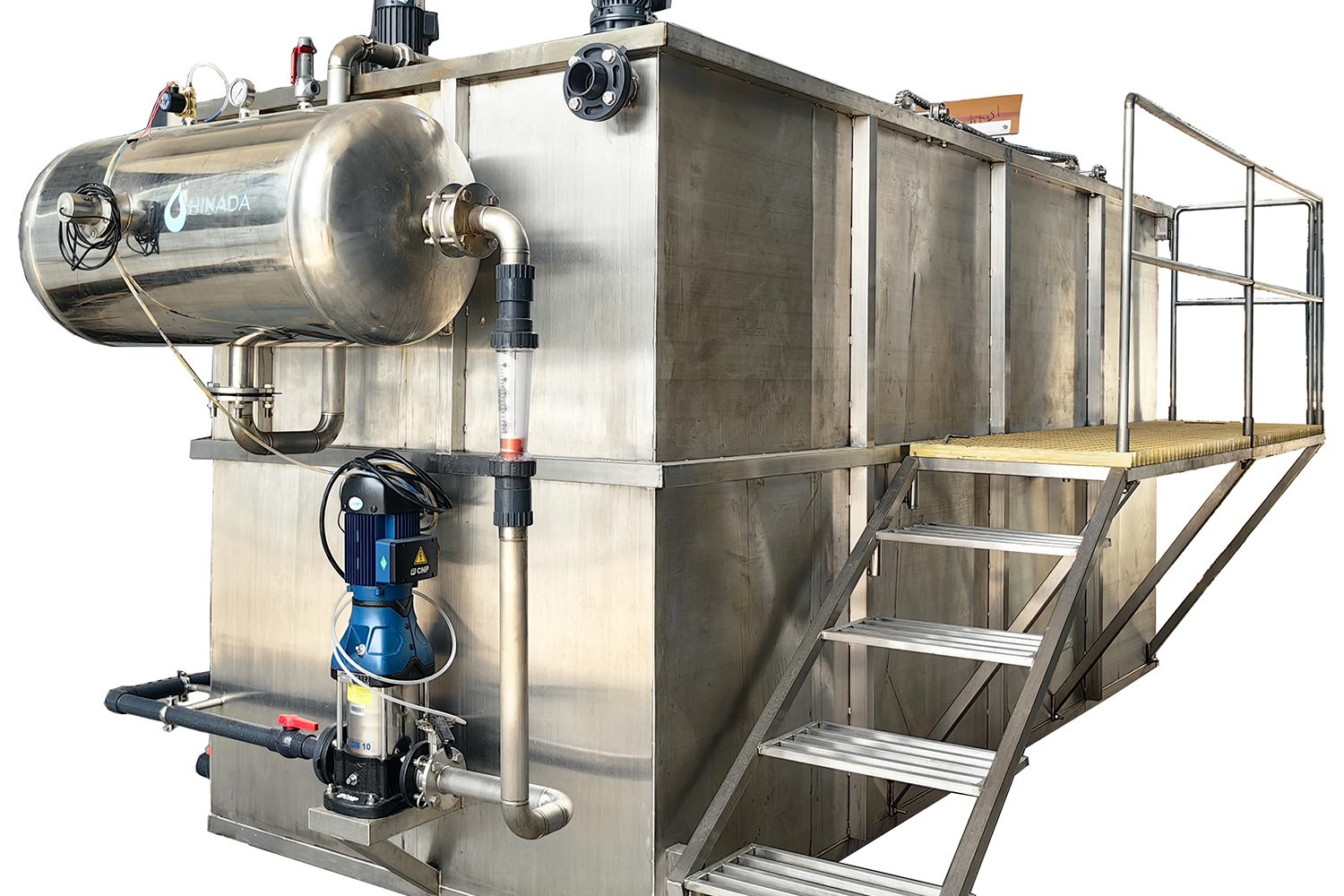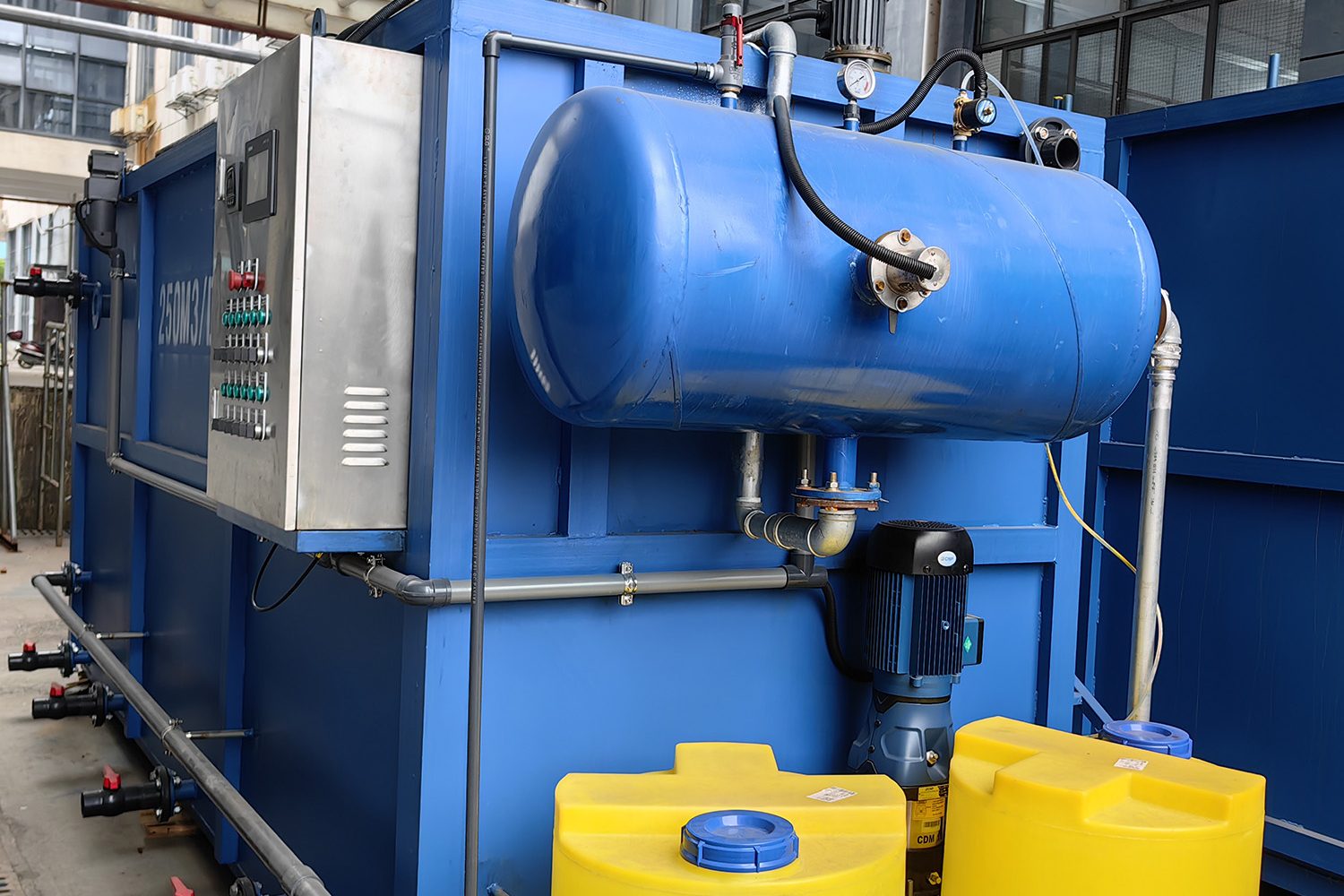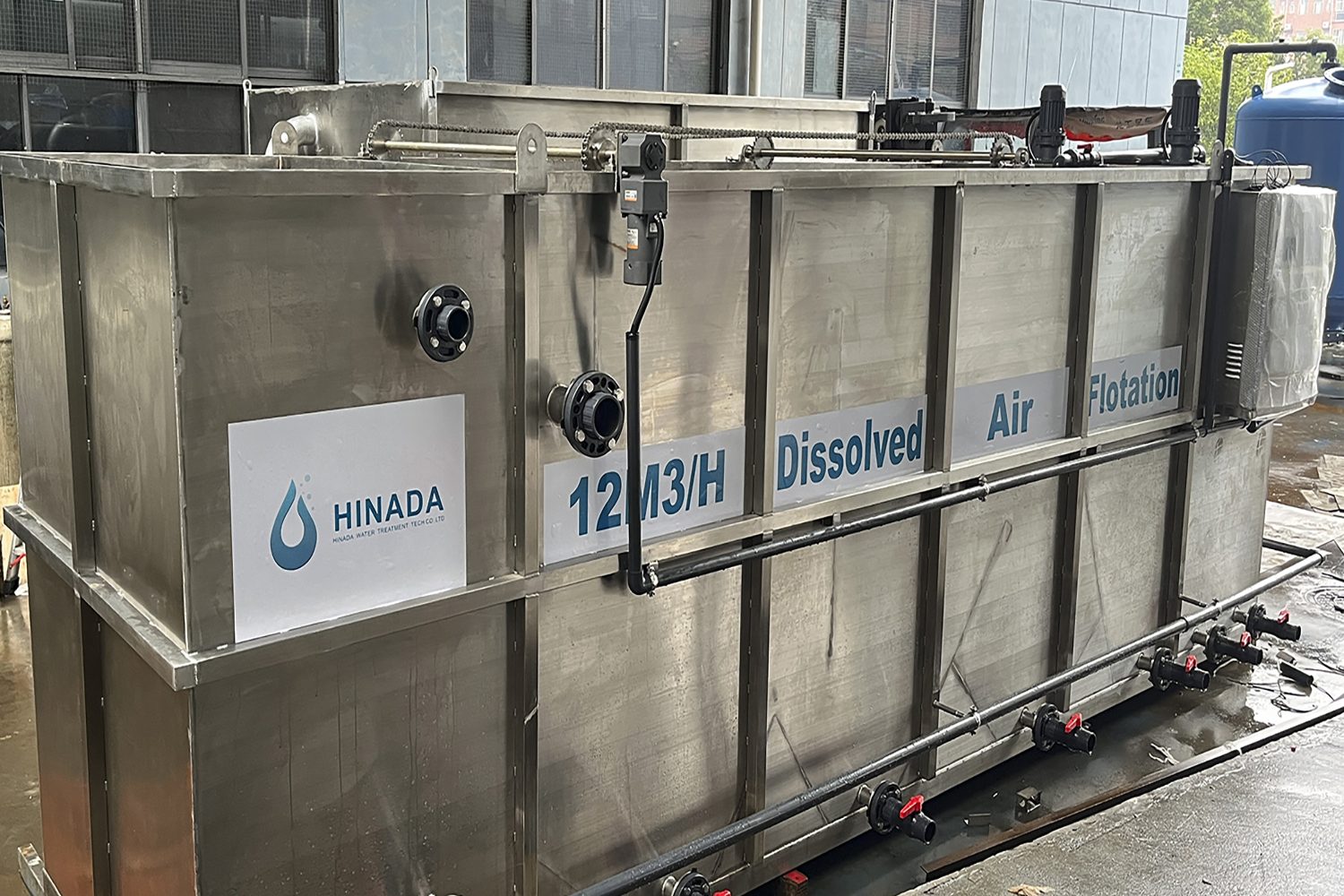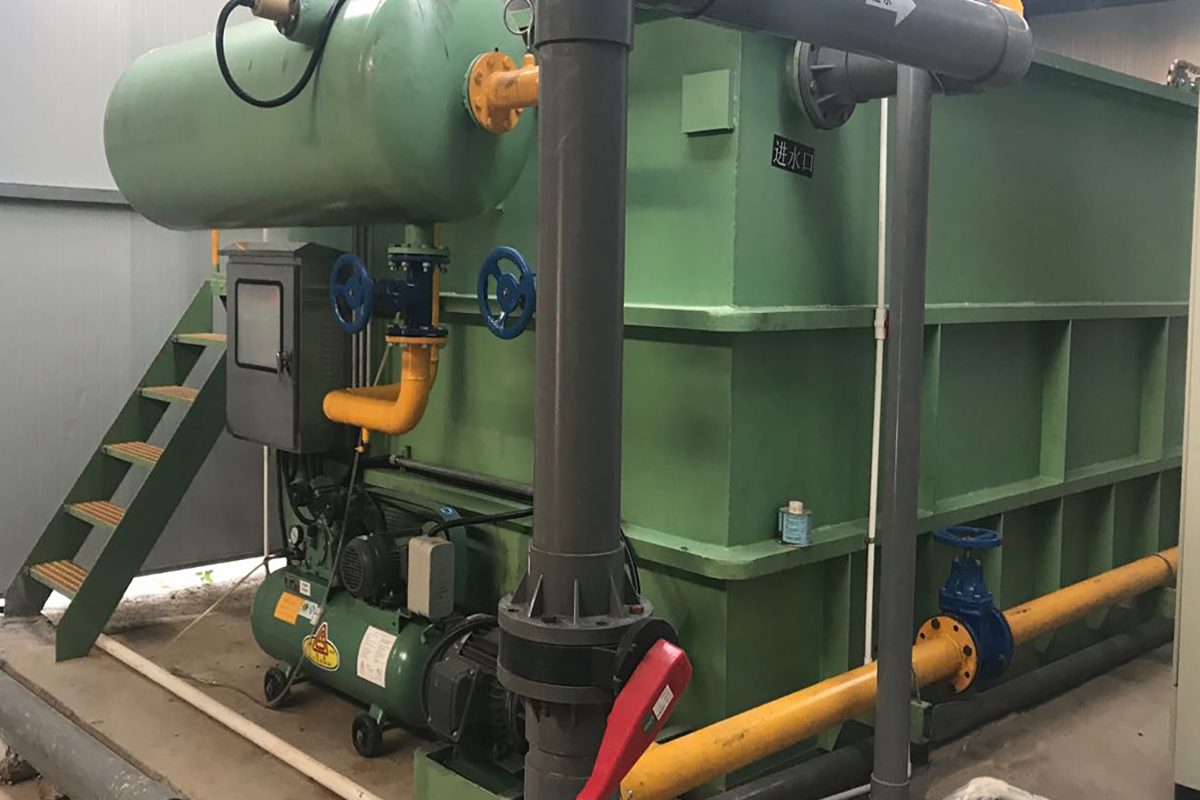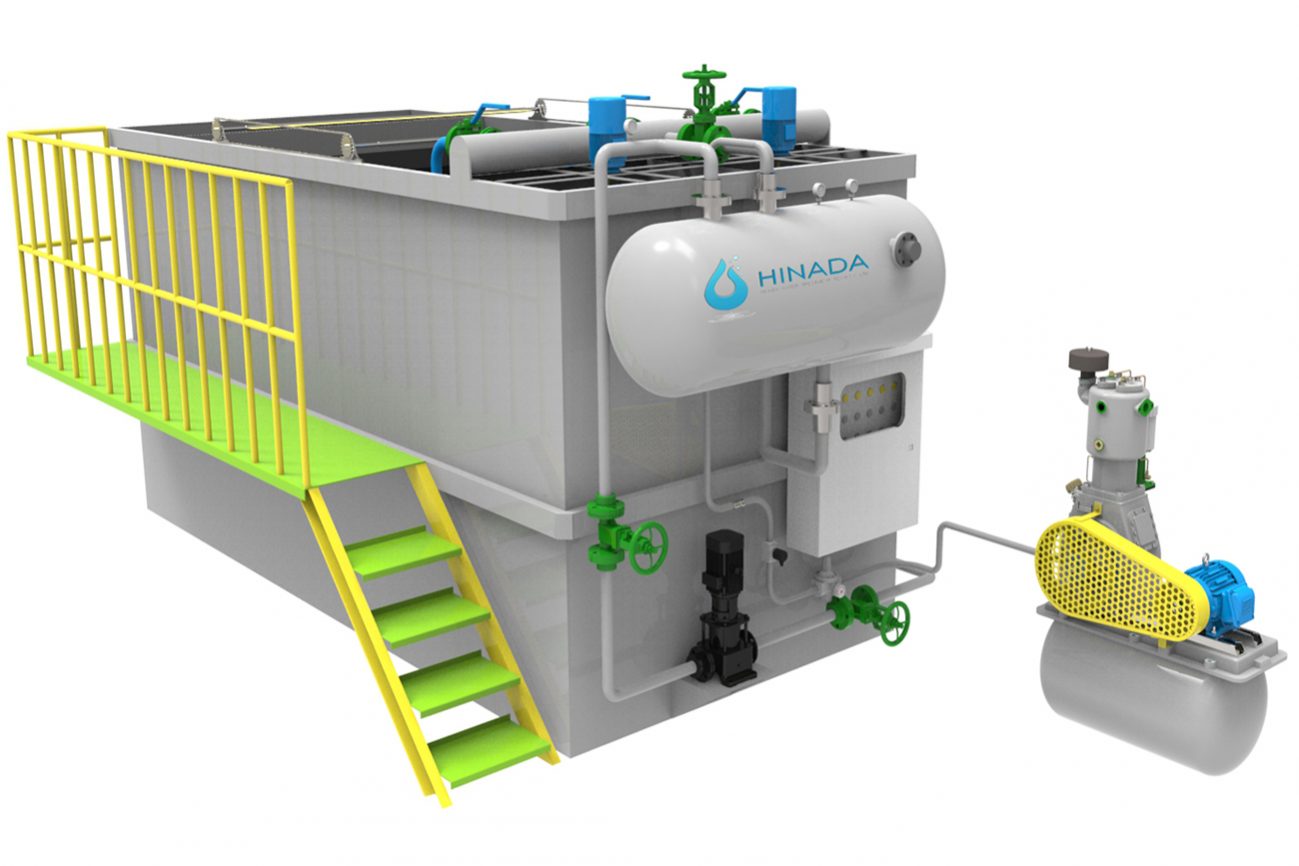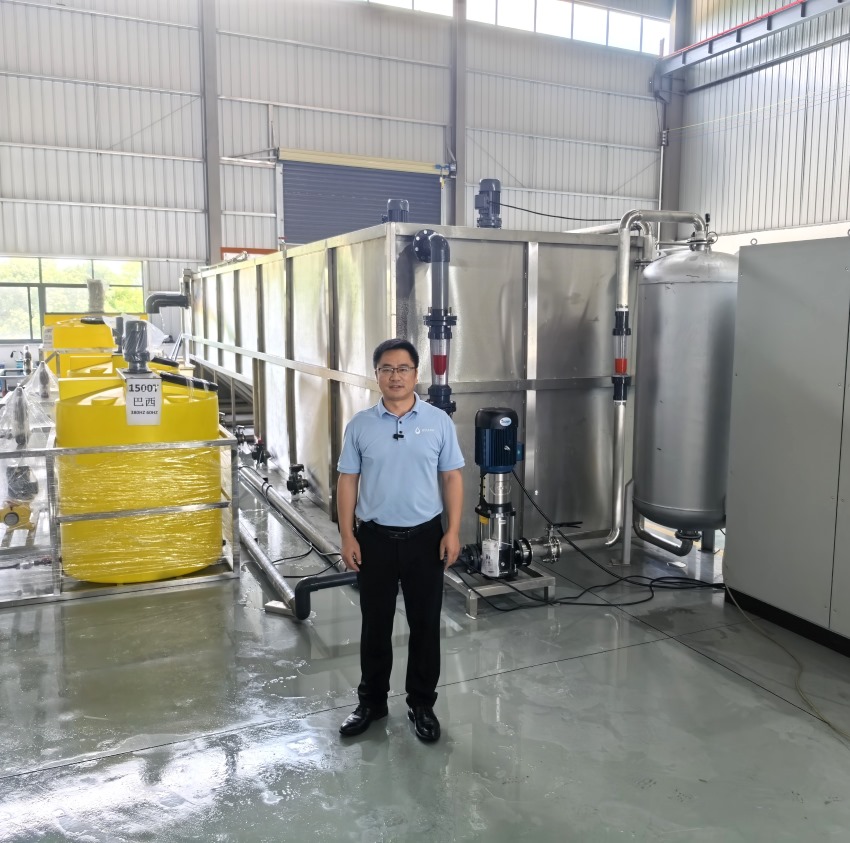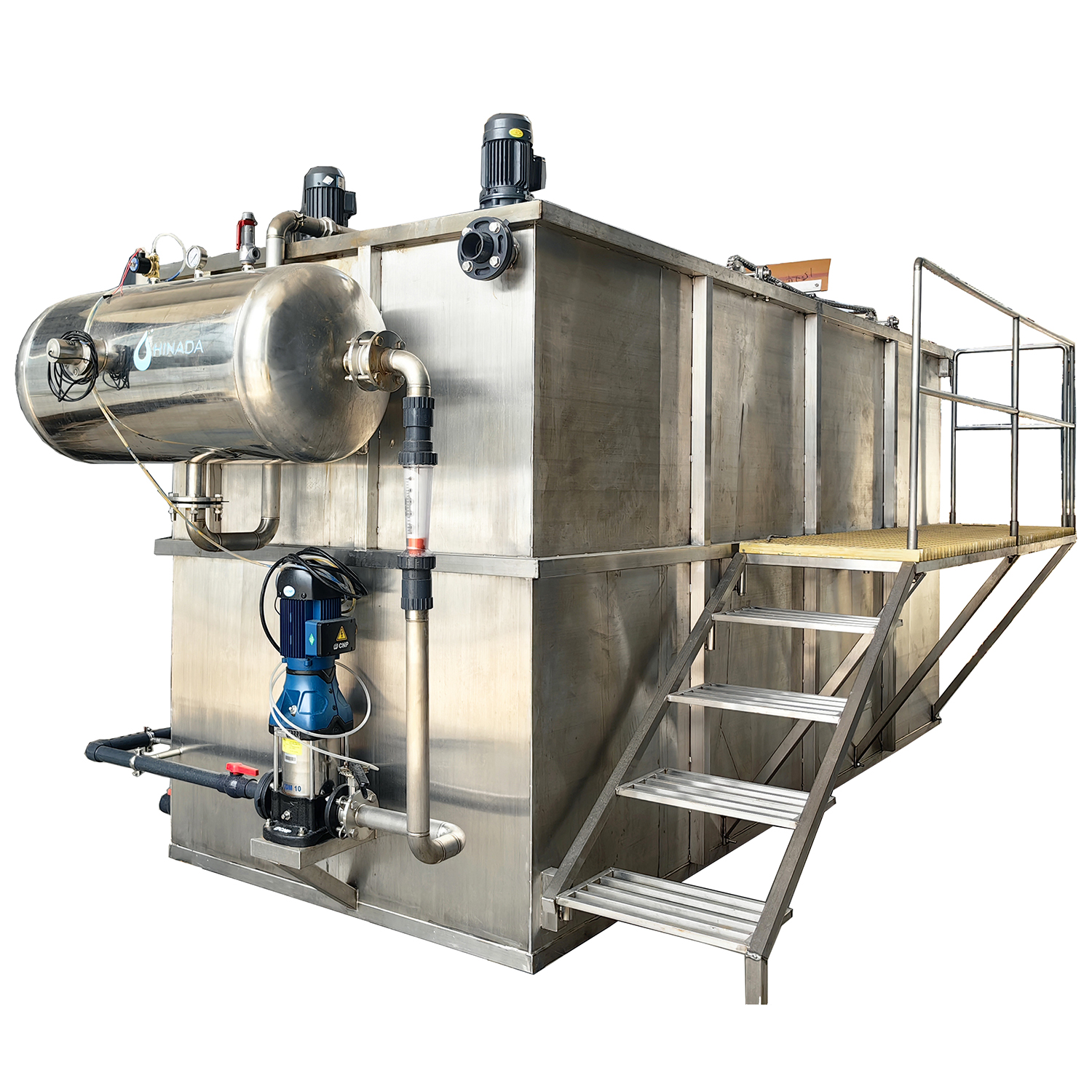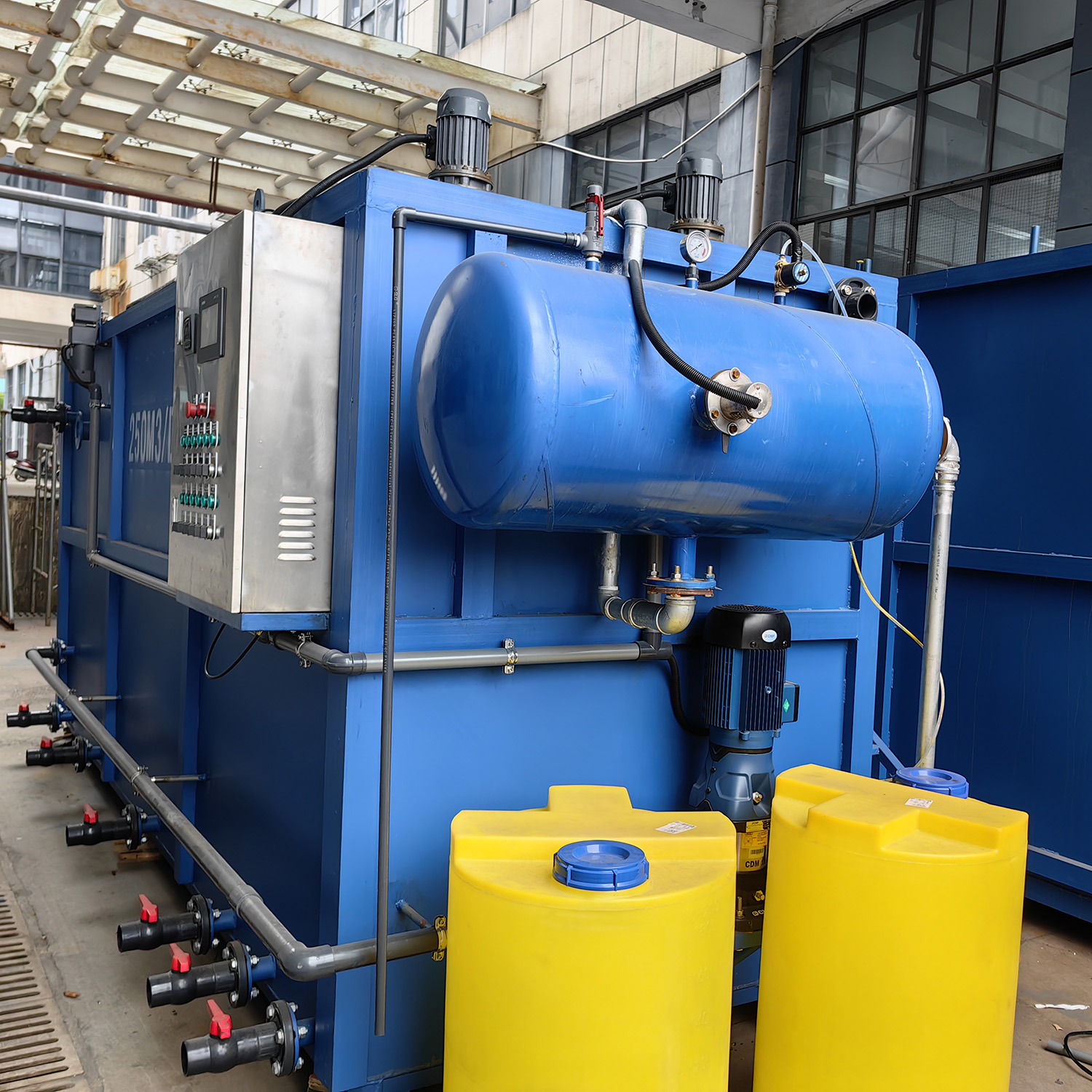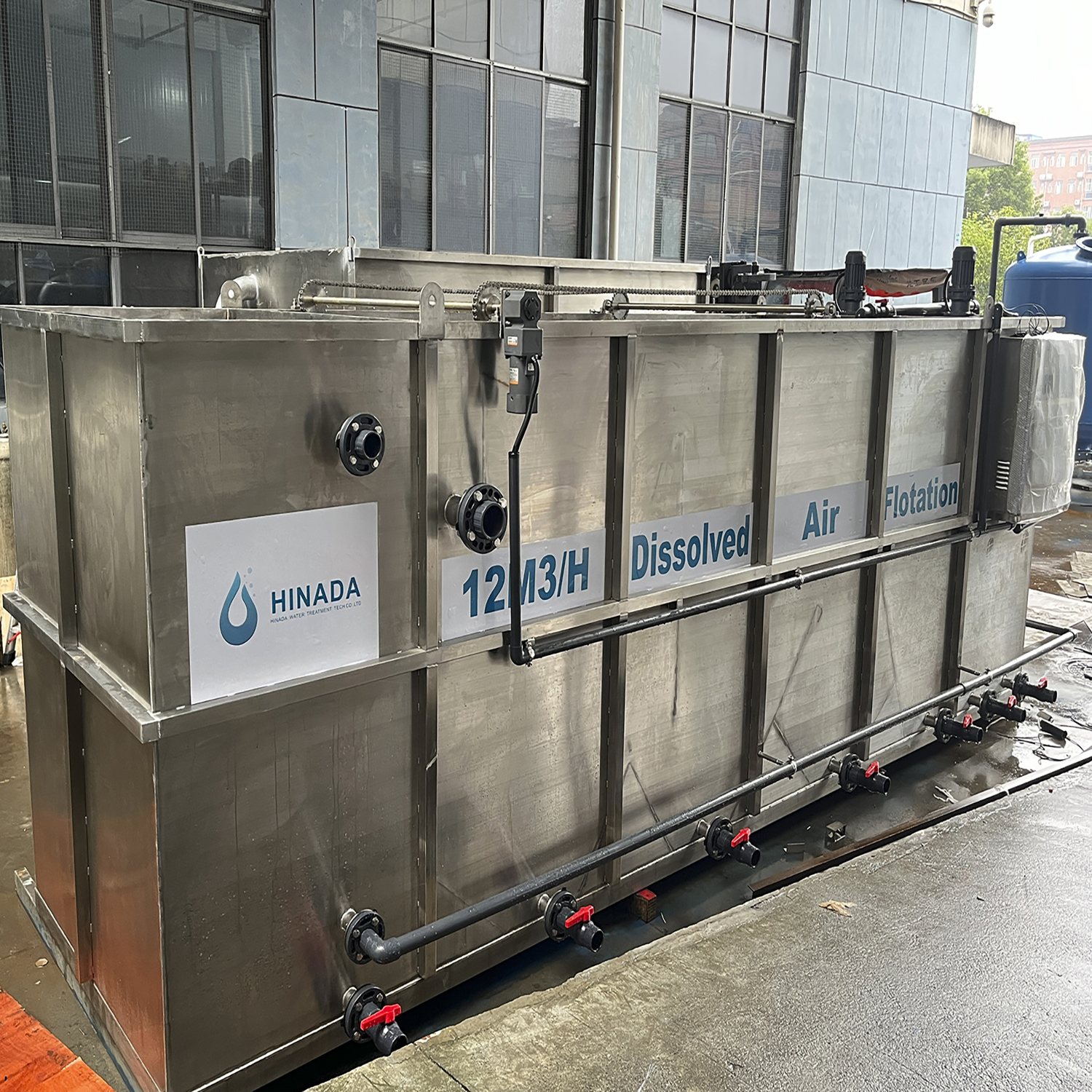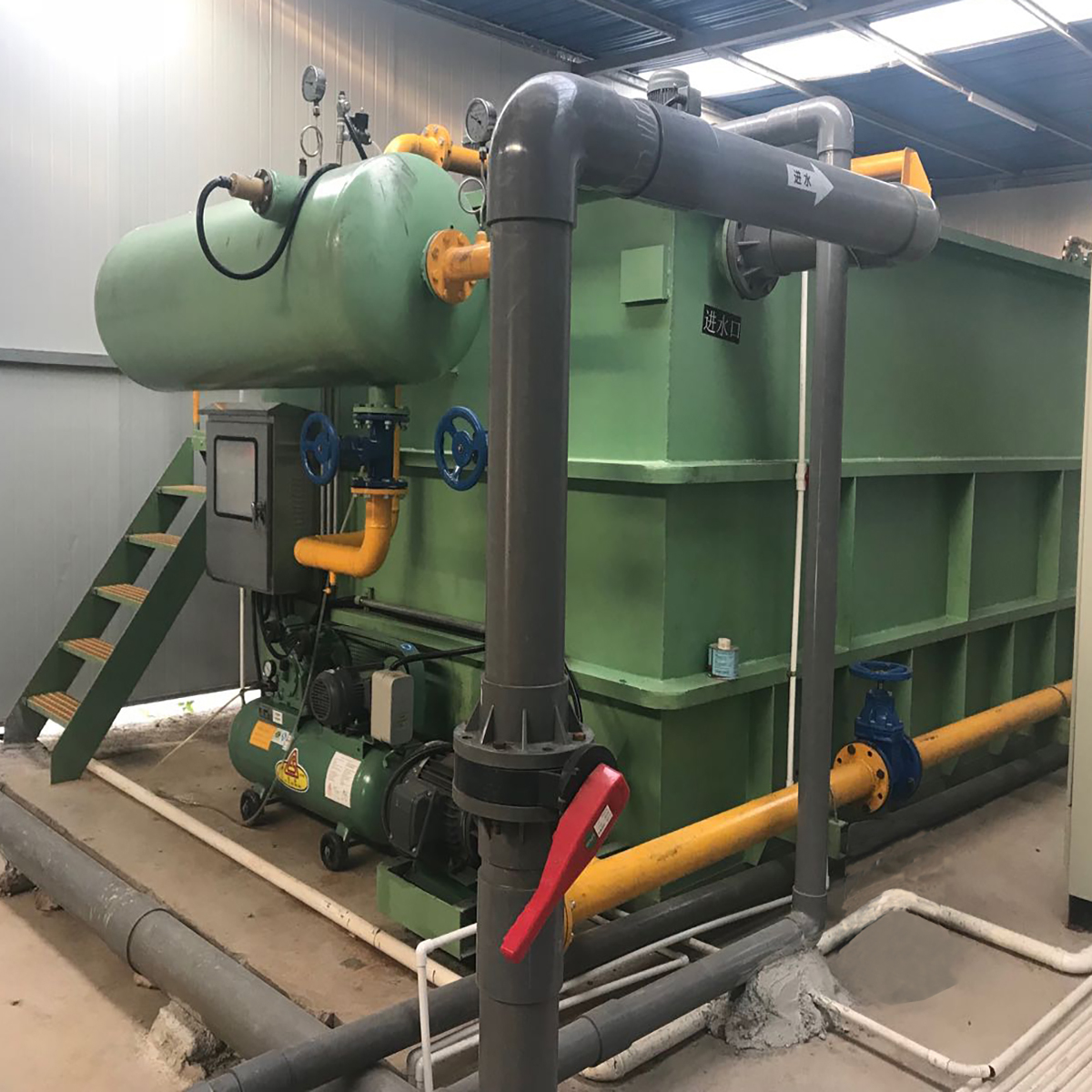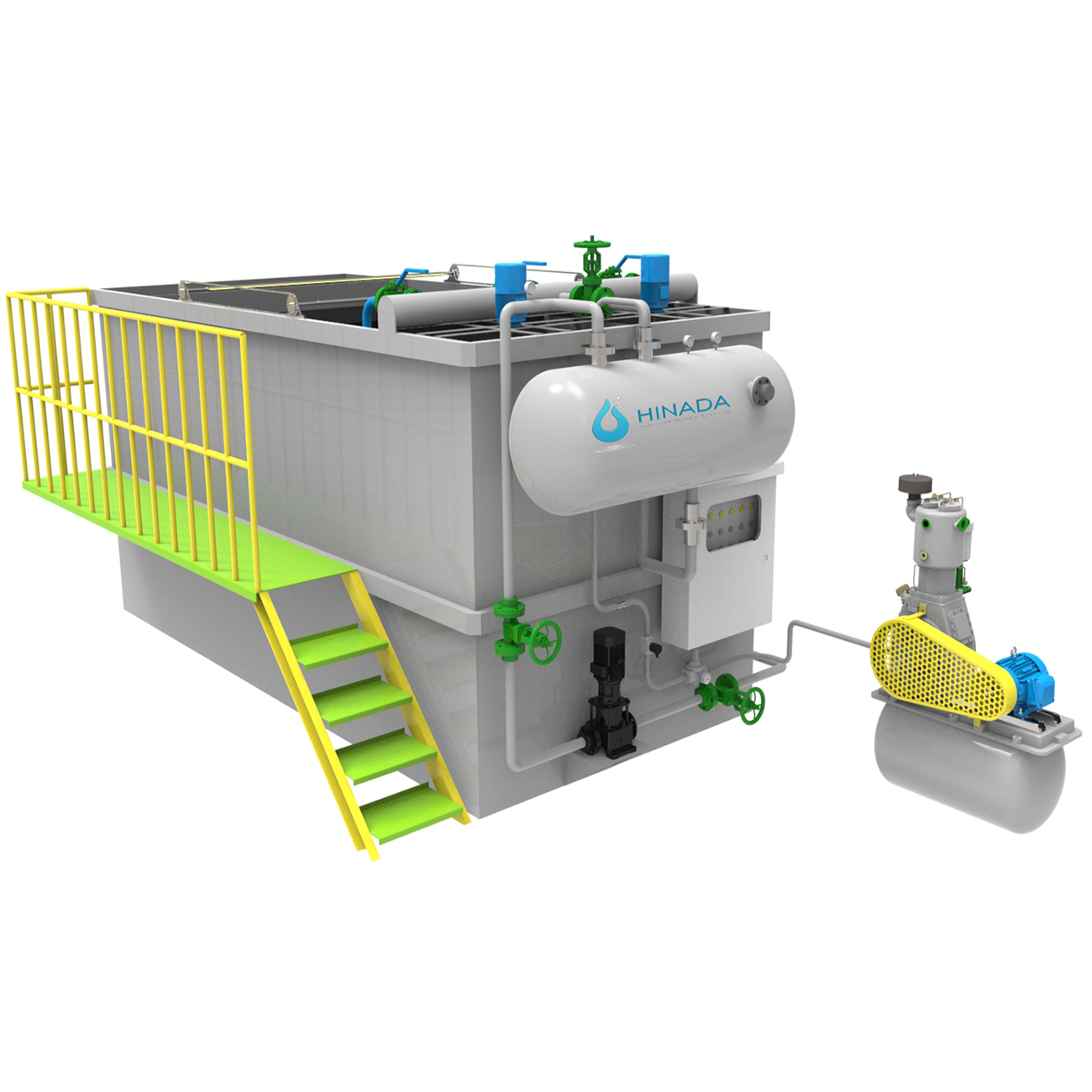


750 m³/day DAF System for Industrial Food Wastewater Treatment
It is a physical-chemical wastewater treatment unit designed to separate fats, oils, grease, suspended solids, and associated organic pollutants from food-processing wastewater.
Hinada a competitive factory for a turnkey, containerized, or skid-mounted Dissolved Air Flotation (DAF) system, and integrated wastewater treatment solutions for food and beverage facilities. A project-specific treatment package can combine screening, equalization, pH adjustment, coagulation, flocculation, dissolved air flotation, and sludge handling.
Product Specification
General Description
- Wastewater Source: Industrial food processing and equipment wash water (high fats, oils, and grease).
- Daily Flow Volume: Max 750 m³/day.
- Hourly Design Flow Rate: 35 m³/hour to 40.0 m³/hour (depending on contamination)
Influent Water Quality Profile (Raw Water)These ranges are not necessarily correlated. Actual characteristics vary with raw materials, production processes, cleaning chemicals, and product losses.
- pH Range: 6.0 – 9.5
- COD (Chemical Oxygen Demand): 2,780 – 4,370 mg/l
- BOD5 (Biochemical Oxygen Demand): 1821 – 2,951 mg/l
- SS (Suspended Solids): 800 – 1116 mg/l
- FOG (Fats, Oils, & Grease): 153 – 506 mg/l
- Wastewater Temperature: < 35°C
- pH: 6.0 – 10.0
- COD: < 3,200 mg/l (Average 24h sample)
- BOD5: < 1,600 mg/l
- SS: < 100 mg/l
- FOG: < 20 mg/l
The illustrated DAF expectations correspond to approximately:
**TSS removal:** 80–90%
**FOG removal:** 80–90%
**COD removal:** 20–50%
**BOD₅ removal:** 10–35%
Results depend on pollutant form, chemical selection, operating conditions, and wastewater variability. Strongly emulsified oil and predominantly soluble COD may require additional treatment.
How the DAF System Works
Step 1: Screening and Equalization
Screens remove food debris and other coarse materials. The equalization tank balances flow and water quality before chemical treatment.
Step 2: pH Adjustment and Coagulation
Acid or alkali is added when necessary to establish appropriate treatment conditions. A selected coagulant destabilizes colloidal particles and helps capture dispersed contaminants.
The optimal pH and chemical type must be determined through testing.
Step 3: Flocculation
Gentle mixing and polymer addition help smaller particles form larger flocs that can attach to air bubbles.
Excessive mixing can break flocs and reduce flotation performance.
Step 4: Dissolved Air Flotation
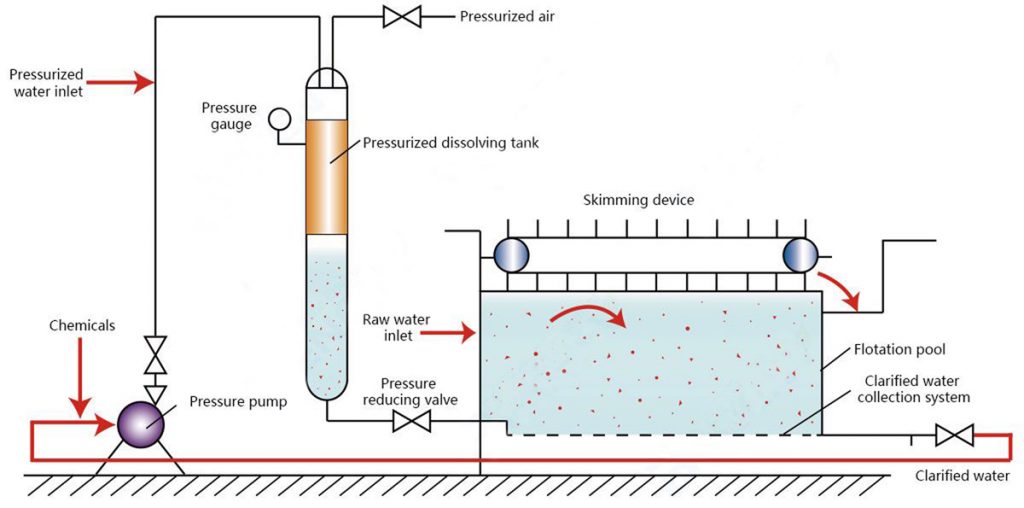
A portion of clarified water is pressurized and contacted with air. When released into the flotation zone, the pressure reduction produces fine bubbles.
These bubbles attach to flocs and lift them toward the surface.
Step 5: Sludge Removal and Effluent Collection
A surface scraper transfers floated sludge to a collection hopper. Clarified water exits through the outlet arrangement and proceeds to the next treatment stage.
Bottom solids should also be removed where the wastewater produces settling material.

Dissolved Air Flotation Machine Specification
Hinada the leading manufacturer of DAF System for industrial wastewater treatment according to project requirement. To make the suitable proposal, we need know more details of project included: capacity, wastewater source,wastewater quality (SS,BOD,COD,FOG etc ).
Dissolved Air Flotation System main feature
DAF System for Food Processing Application
– Dairy and cheese processing
– Meat and poultry processing
– Seafood processing
– Edible oil and prepared-food production
– Industrial bakery rinsing and equipment wash water (high fats, oils, and grease)and confectionery manufacturing
– Vegetable and fruit processing
– Food production facilities with significant washdown wastewater
DAF System Benifits
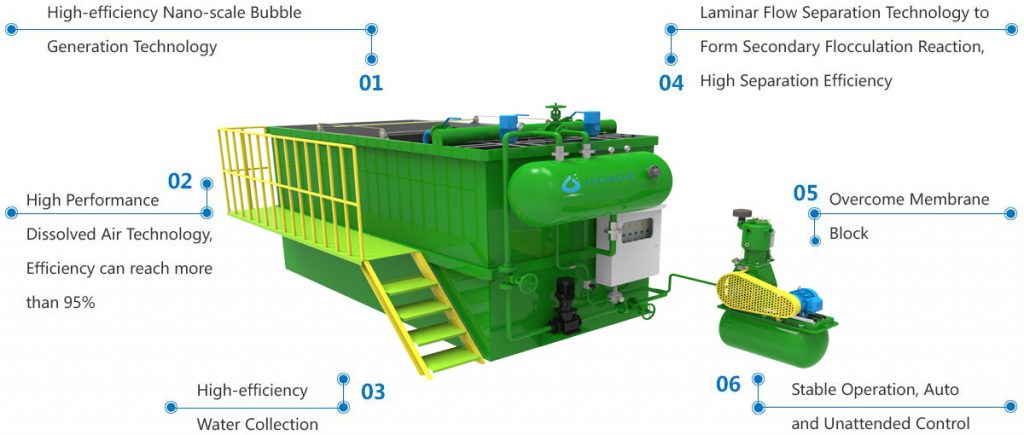
Dissolved Air Flotation System with the purpose to reduce and remove or low down the COD, TSS and FOG from industrial wastewater. The DAF system utilises fine air bubbles, also known as ‘White Water’, which attach themselves to the suspended material within the waste stream, increasing buoyancy and floating them to the surface. The floated solids are then removed by a simple but effective scraper mechanism. More often than not chemical conditioning is used to increase the effectiveness of the Dissolved Air Flotation process.
The Dissolved Air Flotation process uses the most reliable and positive method of producing air bubbles of the optimum size. This is done by dissolving air into water under pressure and then dropping the pressure on entry to the DAF cell using a controlled nozzle orifice. As the pressure is reduced, the air naturally comes out of solution in the form of micro bubbles.
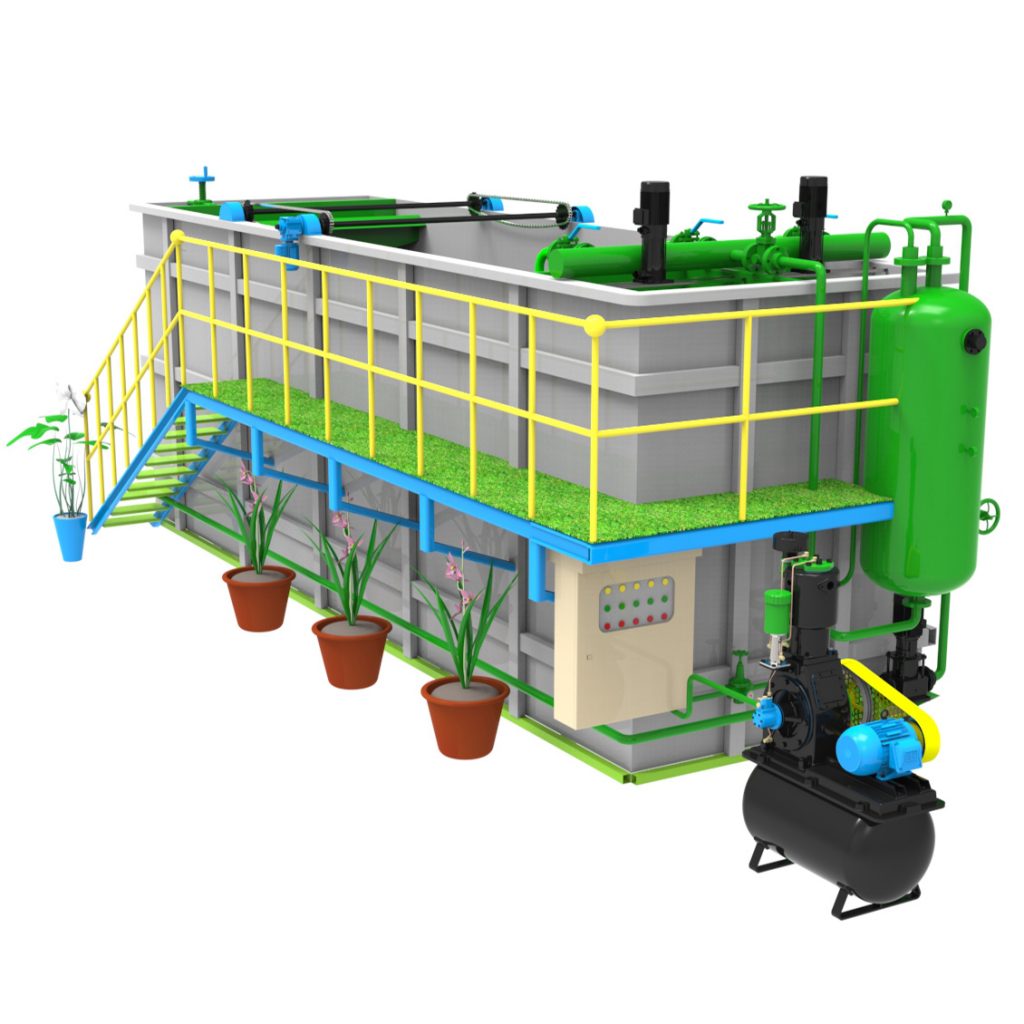
* Hinada has 10 Years custom DAF System for wastewater treatment designing experiences, we can design and install as your any project requirements, reduce your projects investing cost.
* Standard designs according your application, requirement and budget, we are one of leading DAF system manufacturers in China, we can produce and accept any special requirement orders.
Packaging
Plywood case packed or in container loading.
FRQ
Frequently Asked Questions
- Can the 750 m³/day DAF system meet final discharge limits by itself?
Definitely can not , DAF System is pretreatment and effective for suspended solids, fats, and associated organic matter, but soluble COD, BOD, TDS and nutrients may remain. Most high-strength food wastewaters require additional treatment.
2. Why is a 40 m³/hour unit proposed for 750 m³/day?
The average flow over 24 hours is 31.25 m³/hour. A preliminary 40 m³/hour selection provides some hydraulic flexibility, but actual capacity must also be checked against operating hours, peak flow, solids loading, and flotation tests.
3. Does DAF require chemicals?
Many food wastewater applications benefit from coagulation and flocculation, or maybe need PH Adjust. Some free fats and floatable solids may separate without chemicals, but dependable performance should be established through testing.
3. Is the equipment fully automatic?
PLC controls can automate control feed pumps according to water level detector, dosing, recycle pressure, and scraper cycles. Operators are still needed for inspection, chemical replenishment, process adjustments, and maintenance.
4. Can DAF-treated water be reused in food production?
DAF effluent alone should not be assumed suitable for food contact or potable use. Reuse requires application-specific treatment, monitoring, and compliance with relevant food-safety and water-quality requirements.
5. Request a 750 m³/day Food Wastewater Treatment Proposal
Send HINADA your wastewater analysis, production schedule, daily and peak flow, discharge requirements, site layout, and available utilities.
Discuss a DAF package designed around your wastewater—not just a nominal flow rate.**
HINADA — Water is life, treat it right.
- Specifications
-
Product Specification
General Description
Wastewater Design Parameters- Wastewater Source: Industrial food processing and equipment wash water (high fats, oils, and grease).
- Daily Flow Volume: Max 750 m³/day.
- Hourly Design Flow Rate: 35 m³/hour to 40.0 m³/hour (depending on contamination)
Influent Water Quality Profile (Raw Water)These ranges are not necessarily correlated. Actual characteristics vary with raw materials, production processes, cleaning chemicals, and product losses.
- pH Range: 6.0 – 9.5
- COD (Chemical Oxygen Demand): 2,780 – 4,370 mg/l
- BOD5 (Biochemical Oxygen Demand): 1821 – 2,951 mg/l
- SS (Suspended Solids): 800 – 1116 mg/l
- FOG (Fats, Oils, & Grease): 153 – 506 mg/l
- Wastewater Temperature: < 35°C
Required Effluent Discharge Limits (Treatment Goals), At the selected calculation basis, daily incoming loads are approximately- pH: 6.0 – 10.0
- COD: < 3,200 mg/l (Average 24h sample)
- BOD5: < 1,600 mg/l
- SS: < 100 mg/l
- FOG: < 20 mg/l
The illustrated DAF expectations correspond to approximately:
**TSS removal:** 80–90%
**FOG removal:** 80–90%
**COD removal:** 20–50%
**BOD₅ removal:** 10–35%
Results depend on pollutant form, chemical selection, operating conditions, and wastewater variability. Strongly emulsified oil and predominantly soluble COD may require additional treatment.
How the DAF System Works
Step 1: Screening and Equalization
Screens remove food debris and other coarse materials. The equalization tank balances flow and water quality before chemical treatment.
Step 2: pH Adjustment and Coagulation
Acid or alkali is added when necessary to establish appropriate treatment conditions. A selected coagulant destabilizes colloidal particles and helps capture dispersed contaminants.
The optimal pH and chemical type must be determined through testing.
Step 3: Flocculation
Gentle mixing and polymer addition help smaller particles form larger flocs that can attach to air bubbles.
Excessive mixing can break flocs and reduce flotation performance.
Step 4: Dissolved Air Flotation
A portion of clarified water is pressurized and contacted with air. When released into the flotation zone, the pressure reduction produces fine bubbles.
These bubbles attach to flocs and lift them toward the surface.
Step 5: Sludge Removal and Effluent Collection
A surface scraper transfers floated sludge to a collection hopper. Clarified water exits through the outlet arrangement and proceeds to the next treatment stage.
Bottom solids should also be removed where the wastewater produces settling material.
Dissolved Air Flotation Machine Specification
Hinada the leading manufacturer of DAF System for industrial wastewater treatment according to project requirement. To make the suitable proposal, we need know more details of project included: capacity, wastewater source,wastewater quality (SS,BOD,COD,FOG etc ).
Dissolved Air Flotation System main feature
- Application
-
DAF System for Food Processing Application
– Dairy and cheese processing
– Meat and poultry processing
– Seafood processing
– Edible oil and prepared-food production
– Industrial bakery rinsing and equipment wash water (high fats, oils, and grease)and confectionery manufacturing
– Vegetable and fruit processing
– Food production facilities with significant washdown wastewater
- Benefits
-
DAF System Benifits
Dissolved Air Flotation System with the purpose to reduce and remove or low down the COD, TSS and FOG from industrial wastewater. The DAF system utilises fine air bubbles, also known as ‘White Water’, which attach themselves to the suspended material within the waste stream, increasing buoyancy and floating them to the surface. The floated solids are then removed by a simple but effective scraper mechanism. More often than not chemical conditioning is used to increase the effectiveness of the Dissolved Air Flotation process.
The Dissolved Air Flotation process uses the most reliable and positive method of producing air bubbles of the optimum size. This is done by dissolving air into water under pressure and then dropping the pressure on entry to the DAF cell using a controlled nozzle orifice. As the pressure is reduced, the air naturally comes out of solution in the form of micro bubbles.
* Hinada has 10 Years custom DAF System for wastewater treatment designing experiences, we can design and install as your any project requirements, reduce your projects investing cost.
* Standard designs according your application, requirement and budget, we are one of leading DAF system manufacturers in China, we can produce and accept any special requirement orders. - Packaging
-
Packaging
Plywood case packed or in container loading.
- FRQ
-
FRQ
Frequently Asked Questions
- Can the 750 m³/day DAF system meet final discharge limits by itself?
Definitely can not , DAF System is pretreatment and effective for suspended solids, fats, and associated organic matter, but soluble COD, BOD, TDS and nutrients may remain. Most high-strength food wastewaters require additional treatment.
2. Why is a 40 m³/hour unit proposed for 750 m³/day?
The average flow over 24 hours is 31.25 m³/hour. A preliminary 40 m³/hour selection provides some hydraulic flexibility, but actual capacity must also be checked against operating hours, peak flow, solids loading, and flotation tests.
3. Does DAF require chemicals?
Many food wastewater applications benefit from coagulation and flocculation, or maybe need PH Adjust. Some free fats and floatable solids may separate without chemicals, but dependable performance should be established through testing.
3. Is the equipment fully automatic?
PLC controls can automate control feed pumps according to water level detector, dosing, recycle pressure, and scraper cycles. Operators are still needed for inspection, chemical replenishment, process adjustments, and maintenance.
4. Can DAF-treated water be reused in food production?
DAF effluent alone should not be assumed suitable for food contact or potable use. Reuse requires application-specific treatment, monitoring, and compliance with relevant food-safety and water-quality requirements.
5. Request a 750 m³/day Food Wastewater Treatment Proposal
Send HINADA your wastewater analysis, production schedule, daily and peak flow, discharge requirements, site layout, and available utilities.
Discuss a DAF package designed around your wastewater—not just a nominal flow rate.**
HINADA — Water is life, treat it right.
- DAF System Video
-
Send Inquiry To Us
What is dissolved air flotation (DAF) Chemical Consumption?
| Chemical | Illustrative Dosing Basis | Estimated Daily Consumption |
| Coagulant | 100–300 mg/L, dry-product equivalent | 75–225 kg/day |
| Flocculant polymer | 1–3 mg/L, active polymer basis | 0.75–2.25 kg/day |
| Acid or alkali | Determined by pH, alkalinity, and titration | To be established by testing |
These ranges are starting allowances only. Actual demand may fall outside them.
The coagulant basis refers to the selected dry product, not elemental aluminum or iron. Commercial liquid products must be converted using their declared composition and concentration.
For illustration, supplying 75–225 kg/day of equivalent dry product through a liquid containing 30% equivalent product by mass would require approximately 250–750 kg/day of that liquid.
what’s the total Operating Cost ?
A realistic operating-cost estimate should include:
– Electricity
– Coagulant, polymer, and pH adjustment chemicals
– Operator labor
– Sludge dewatering and disposal
– Service water
– Spare parts and routine maintenance
Local chemical and sludge disposal prices can have a substantial effect on total cost per cubic meter.