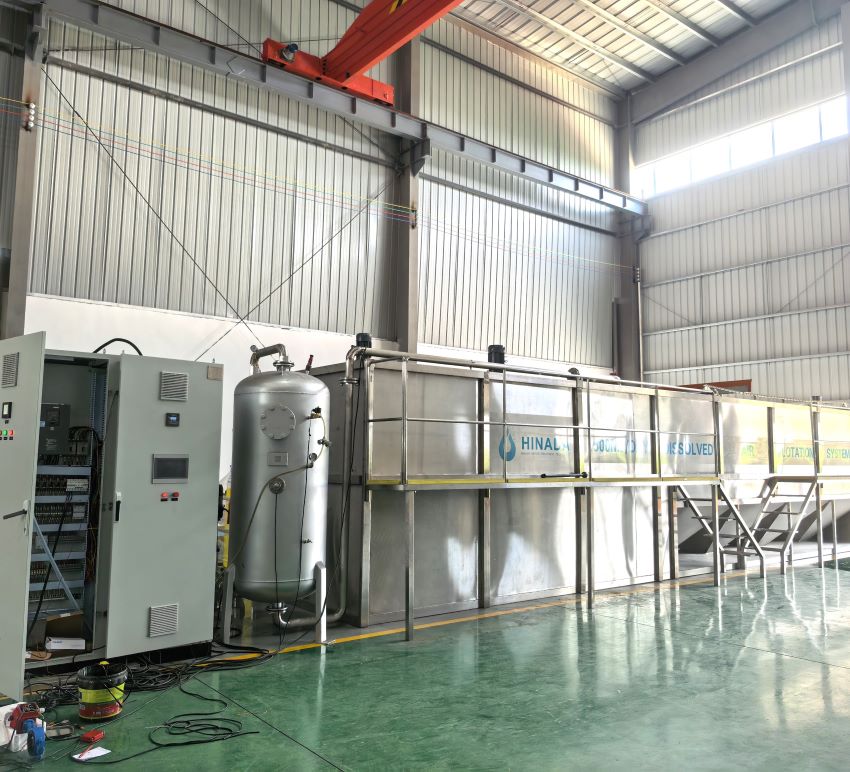
1500m3/day DAF System for Food Prcessing Factory Wastewater
Oil and Grease: remove 70—90% of input
Suspended matter: remove 50—80%
COD: low down 40%
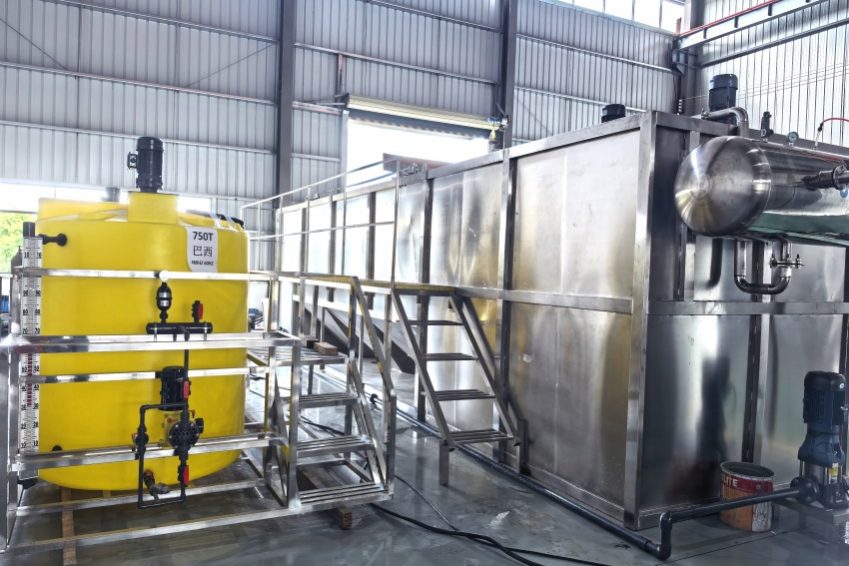
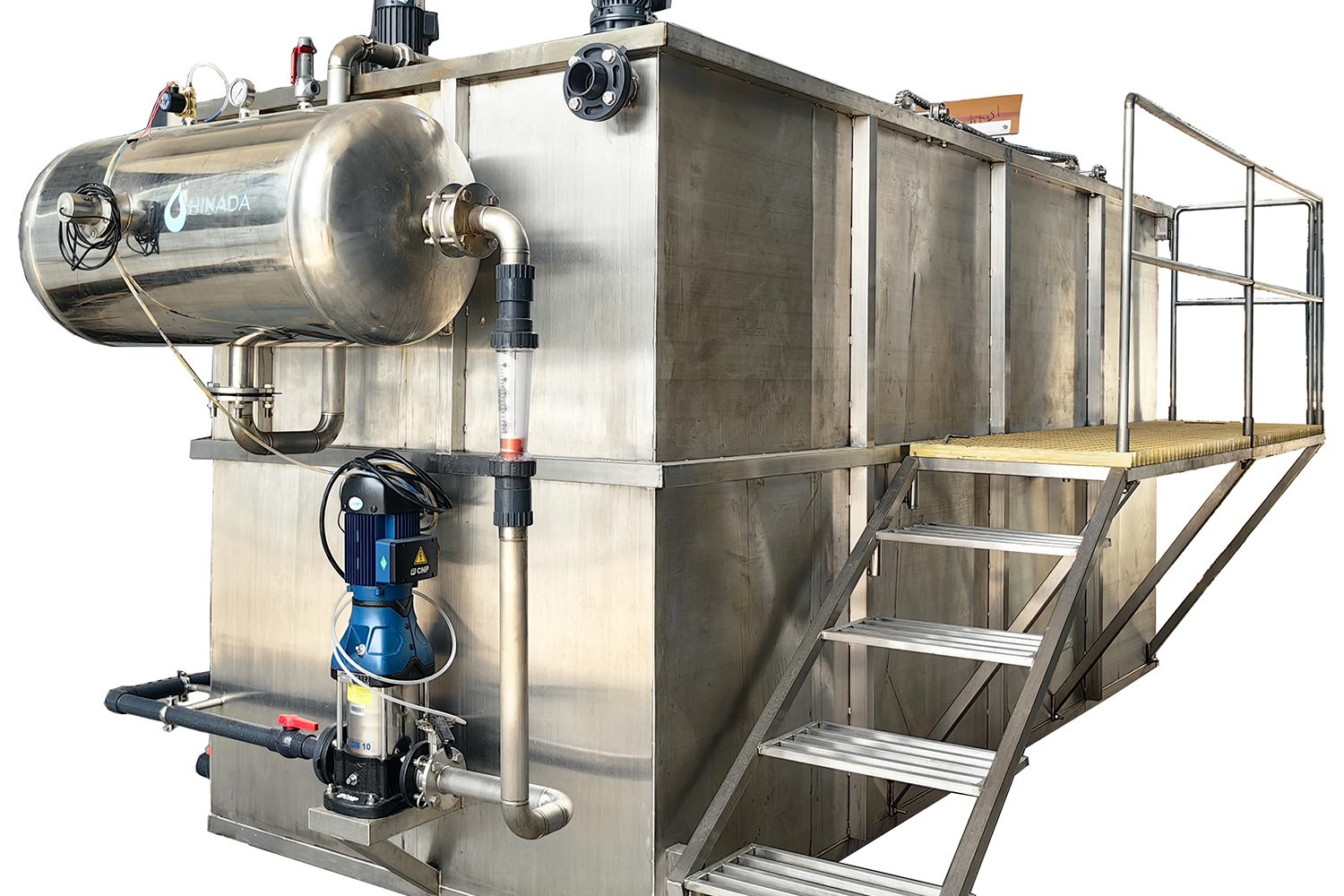
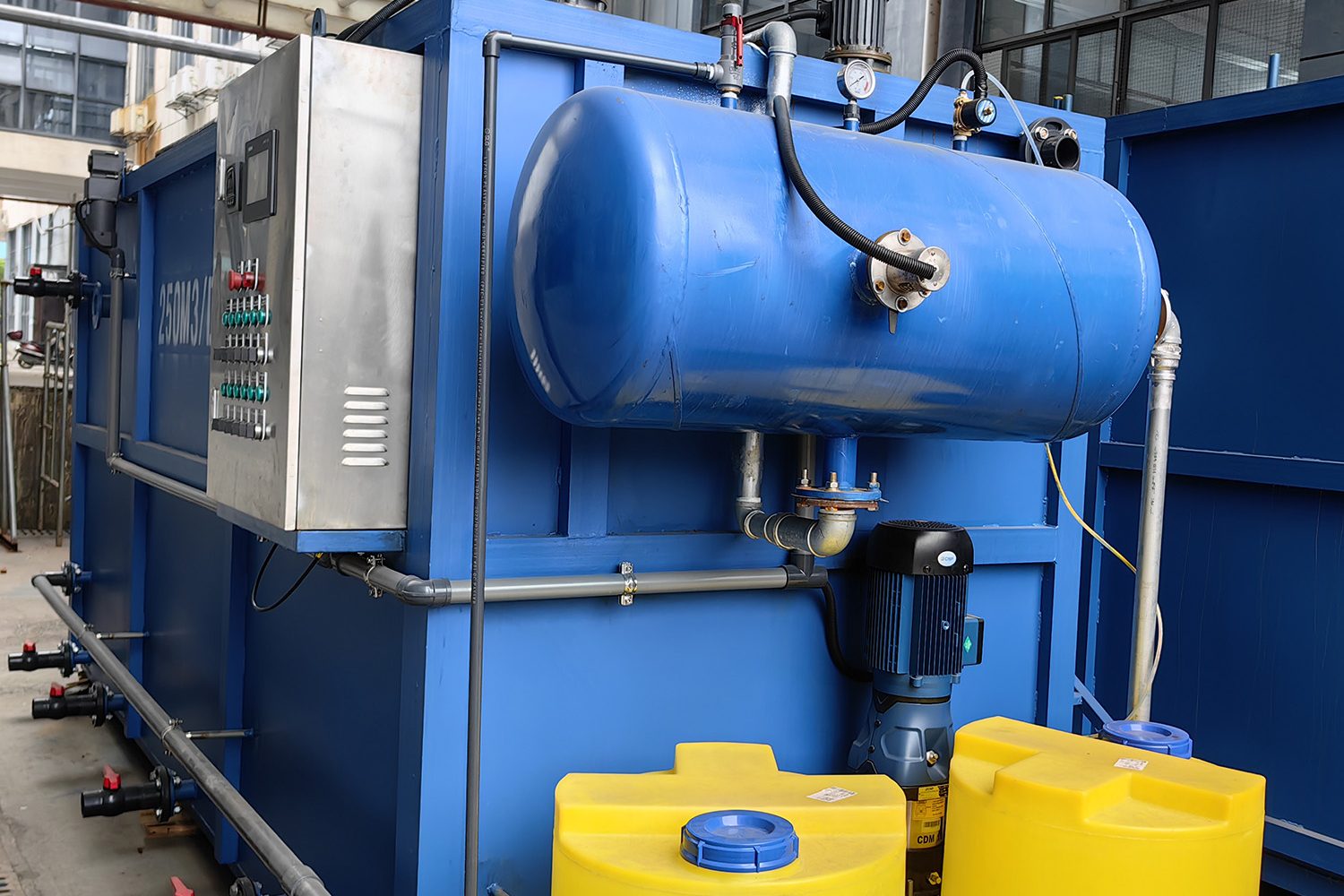
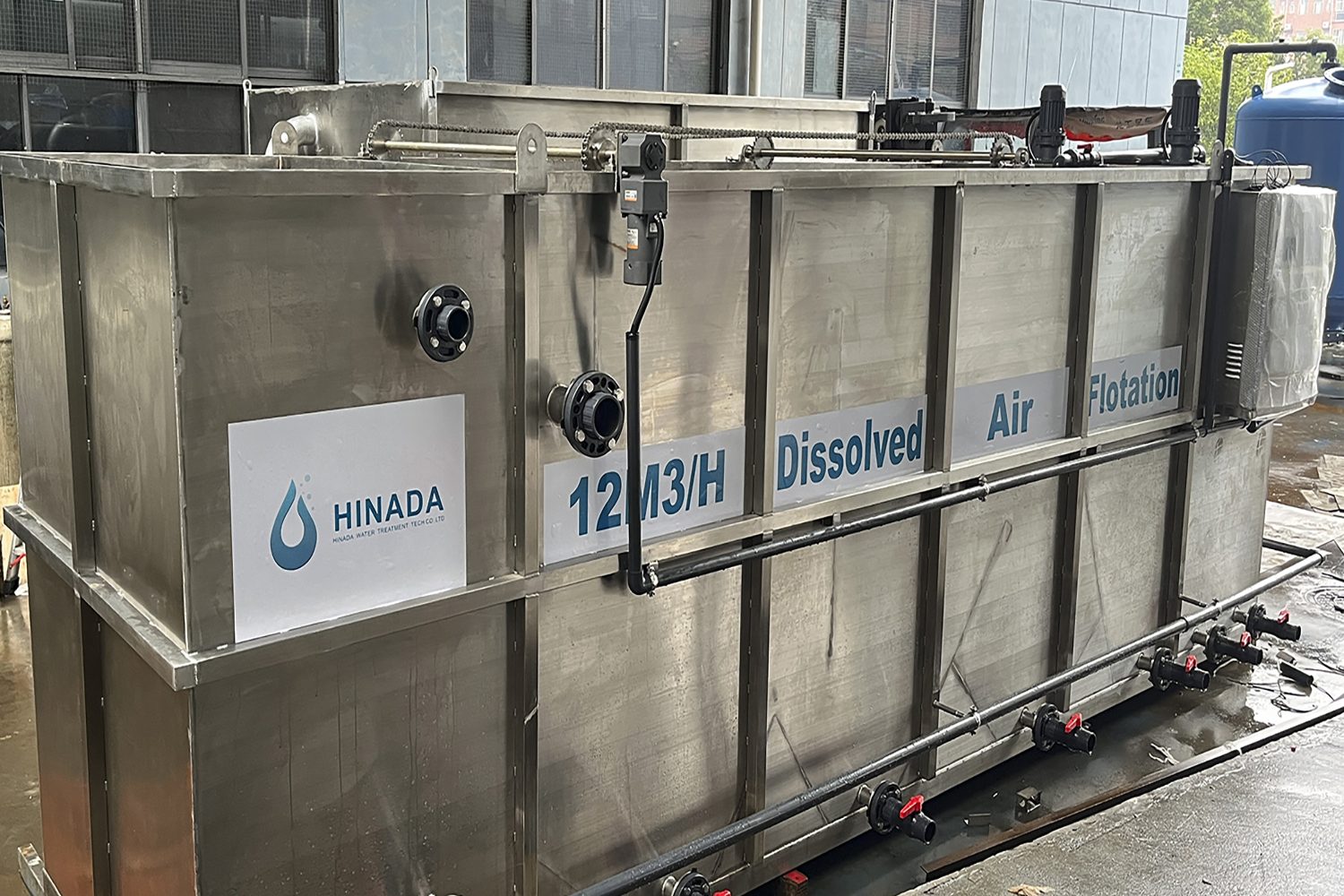
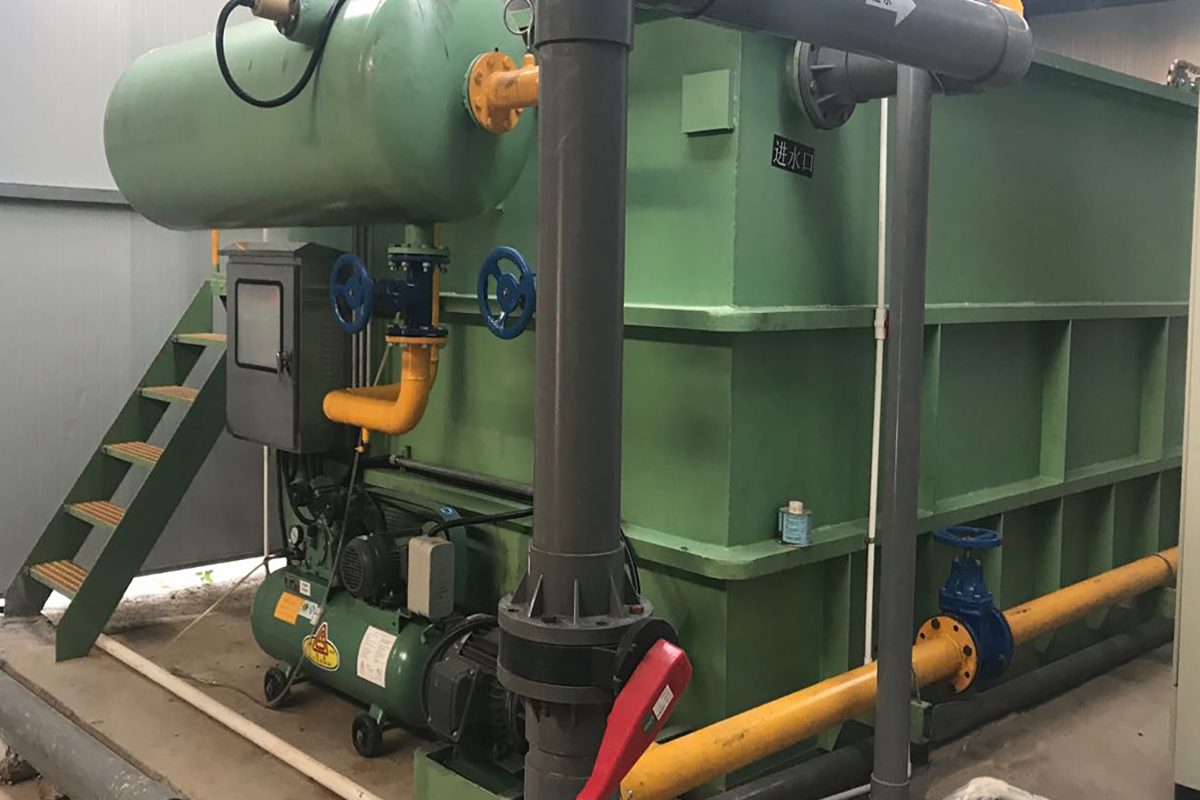
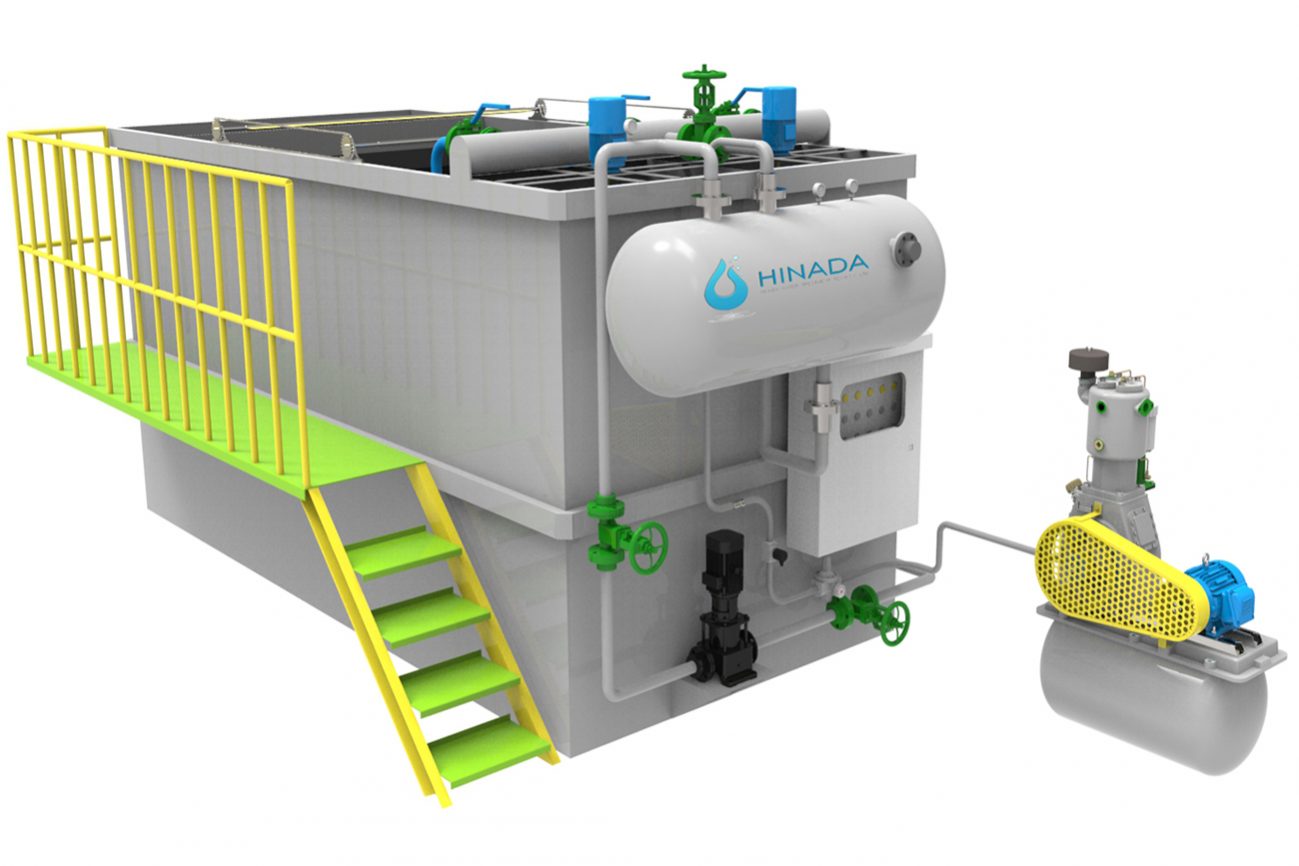
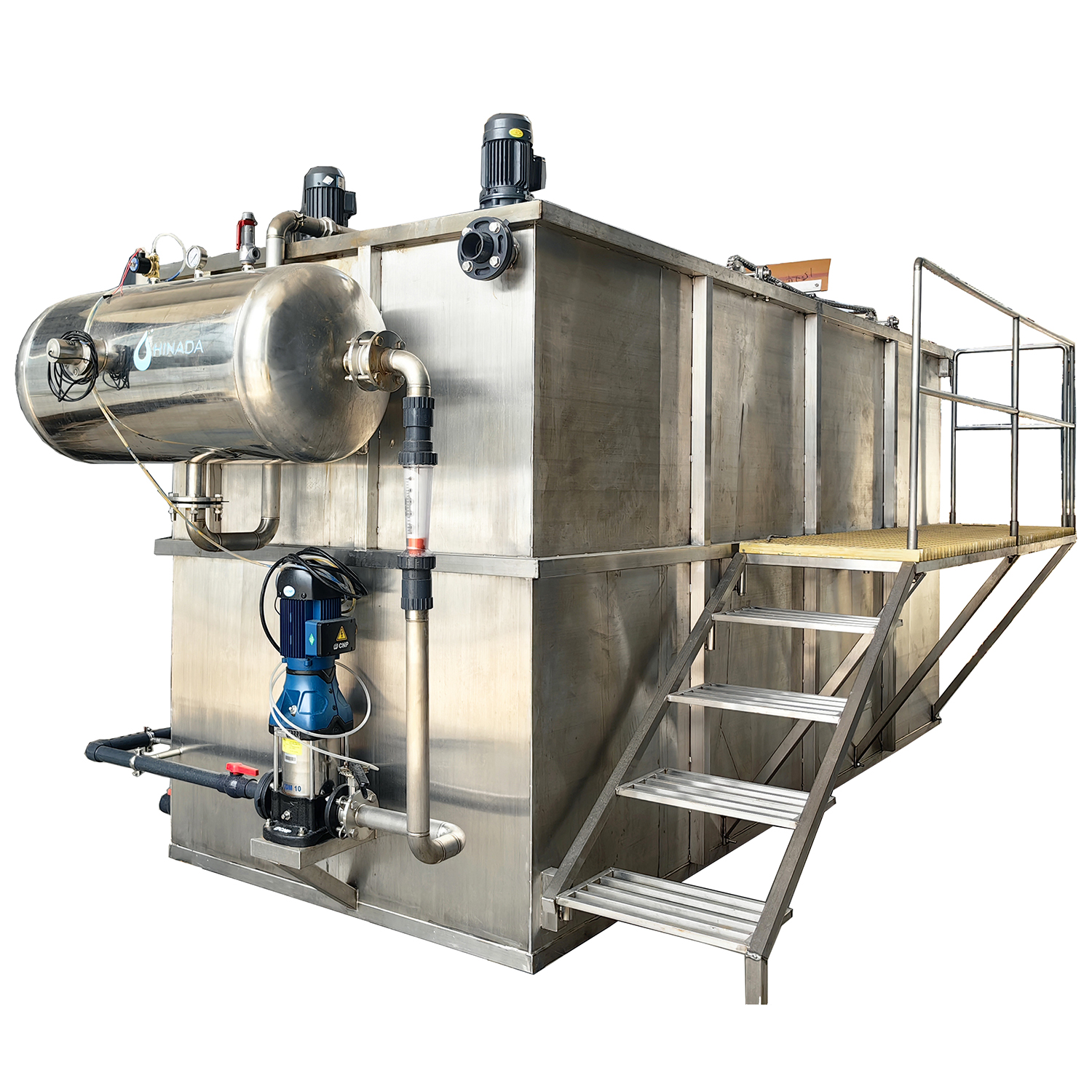
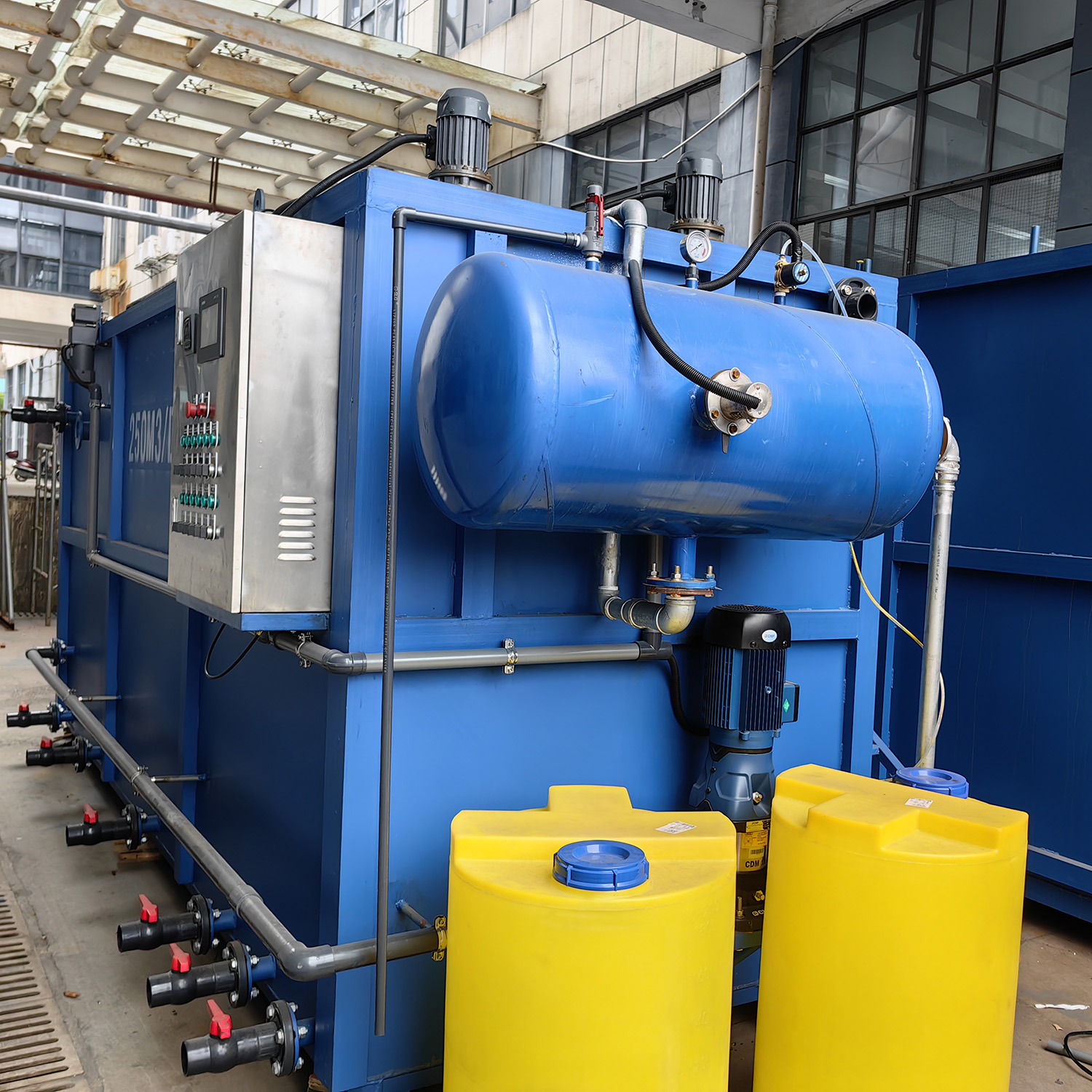
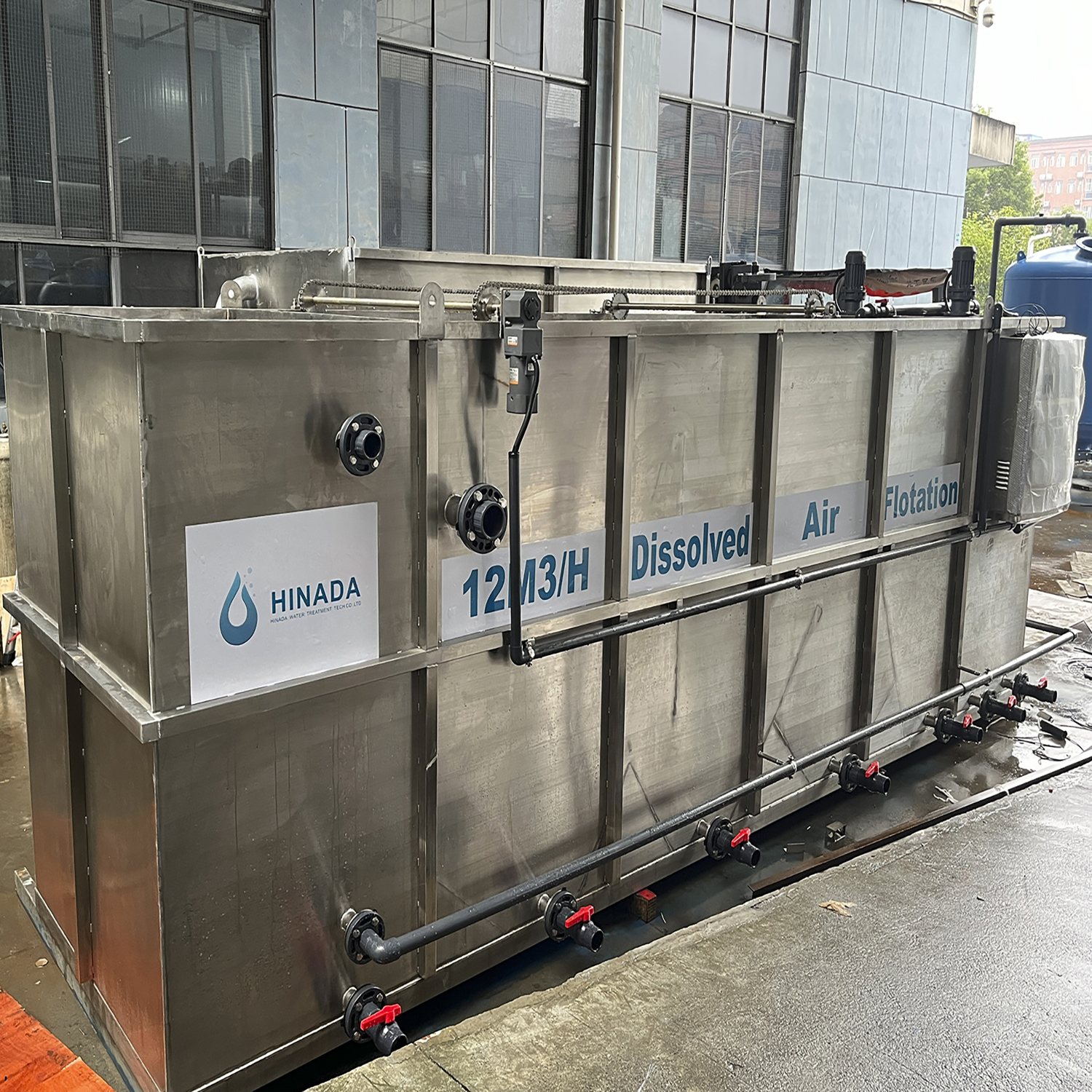
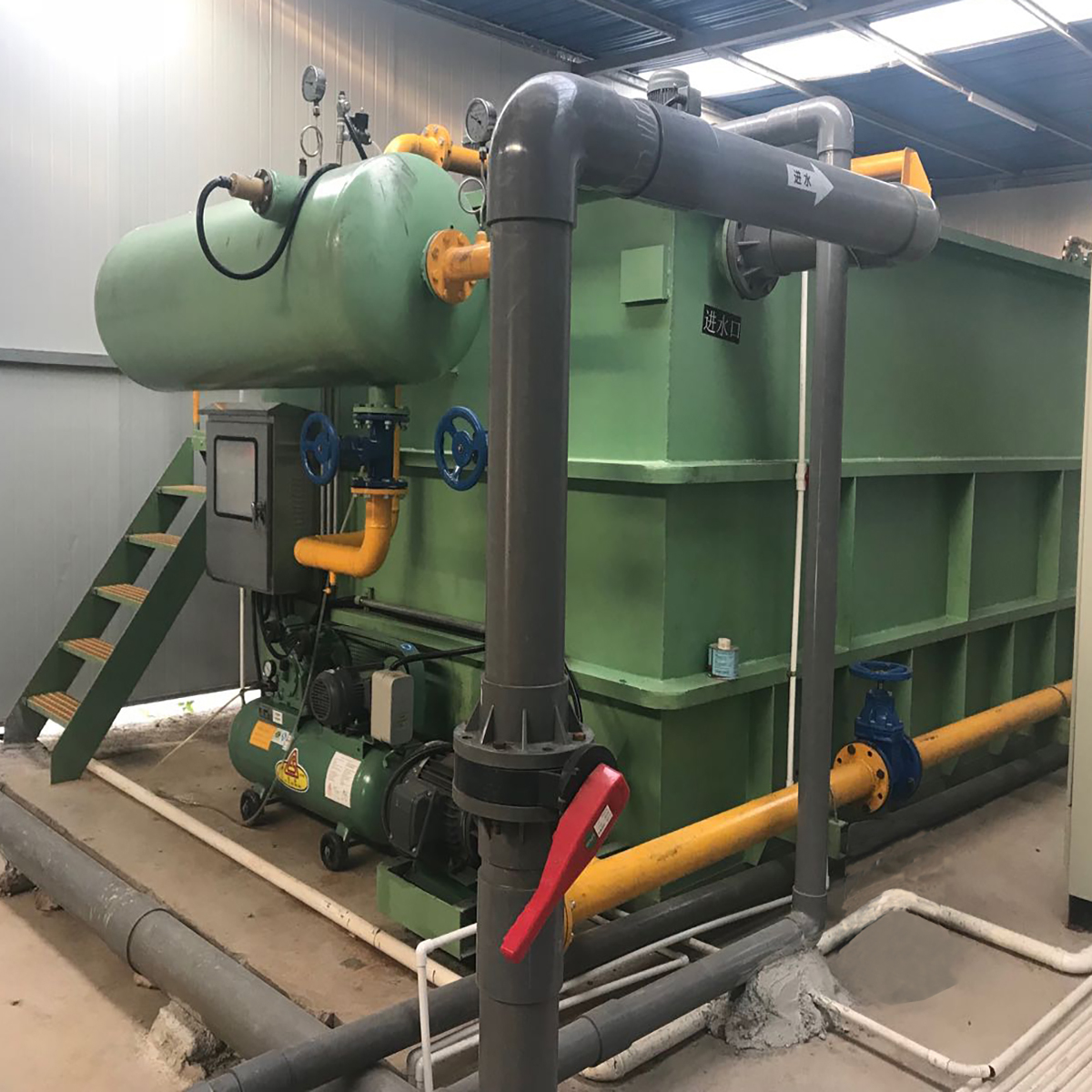
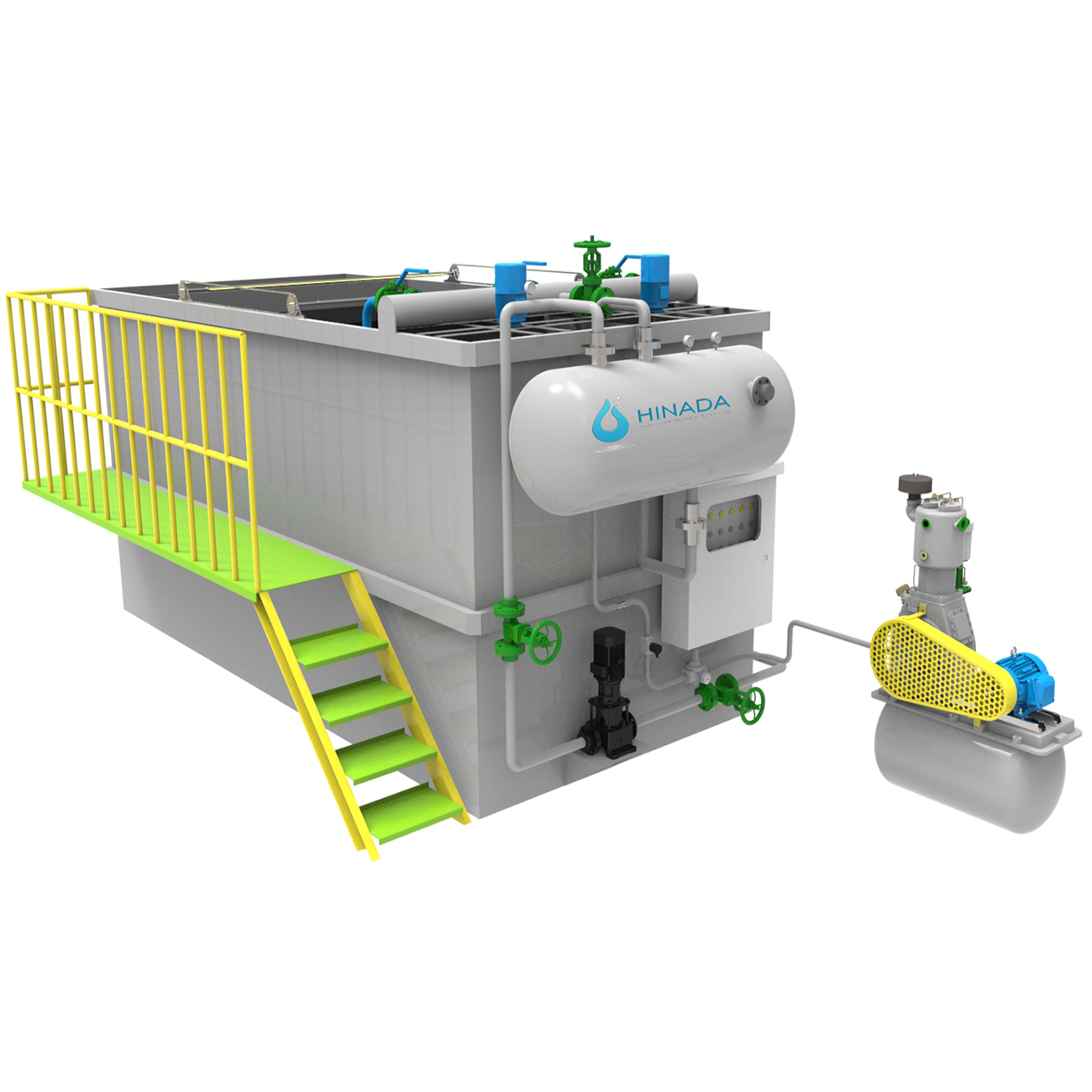
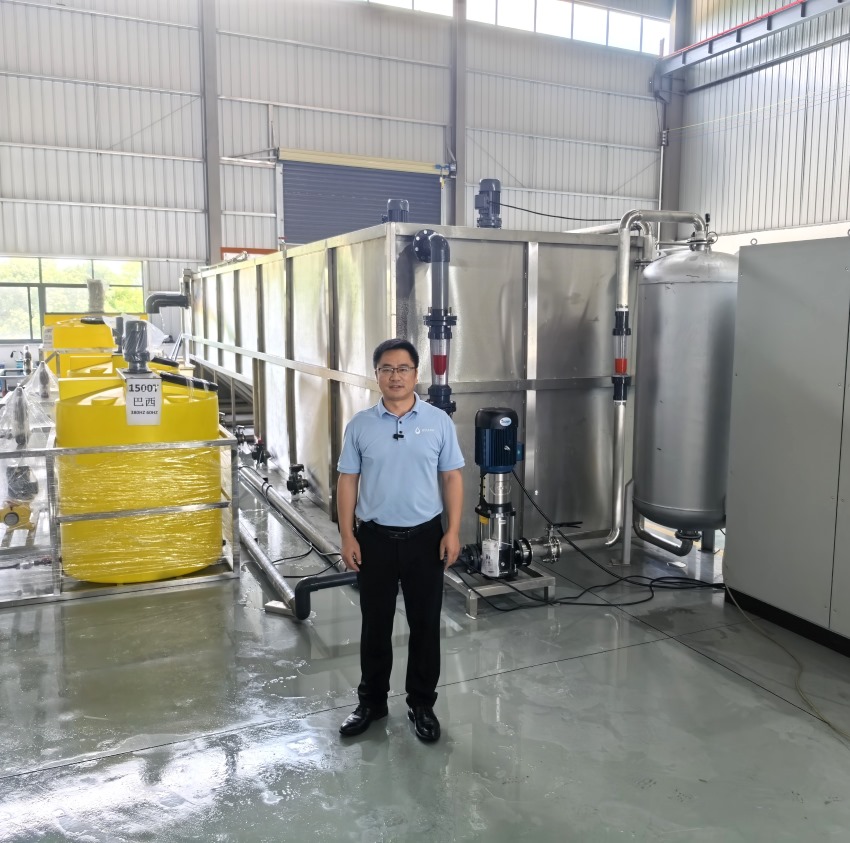
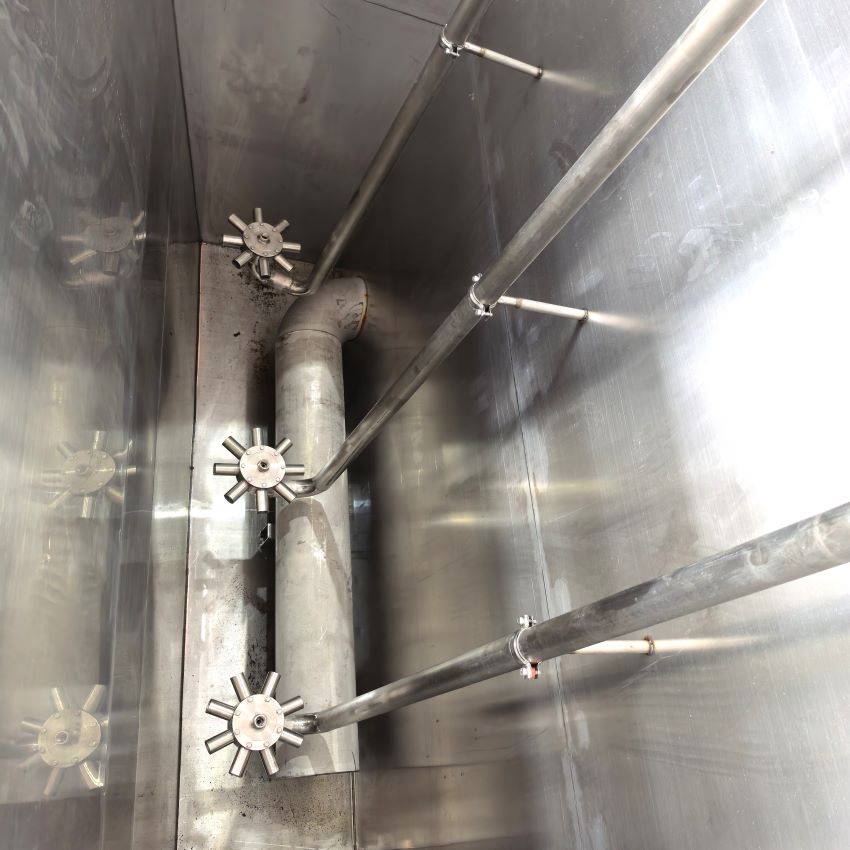
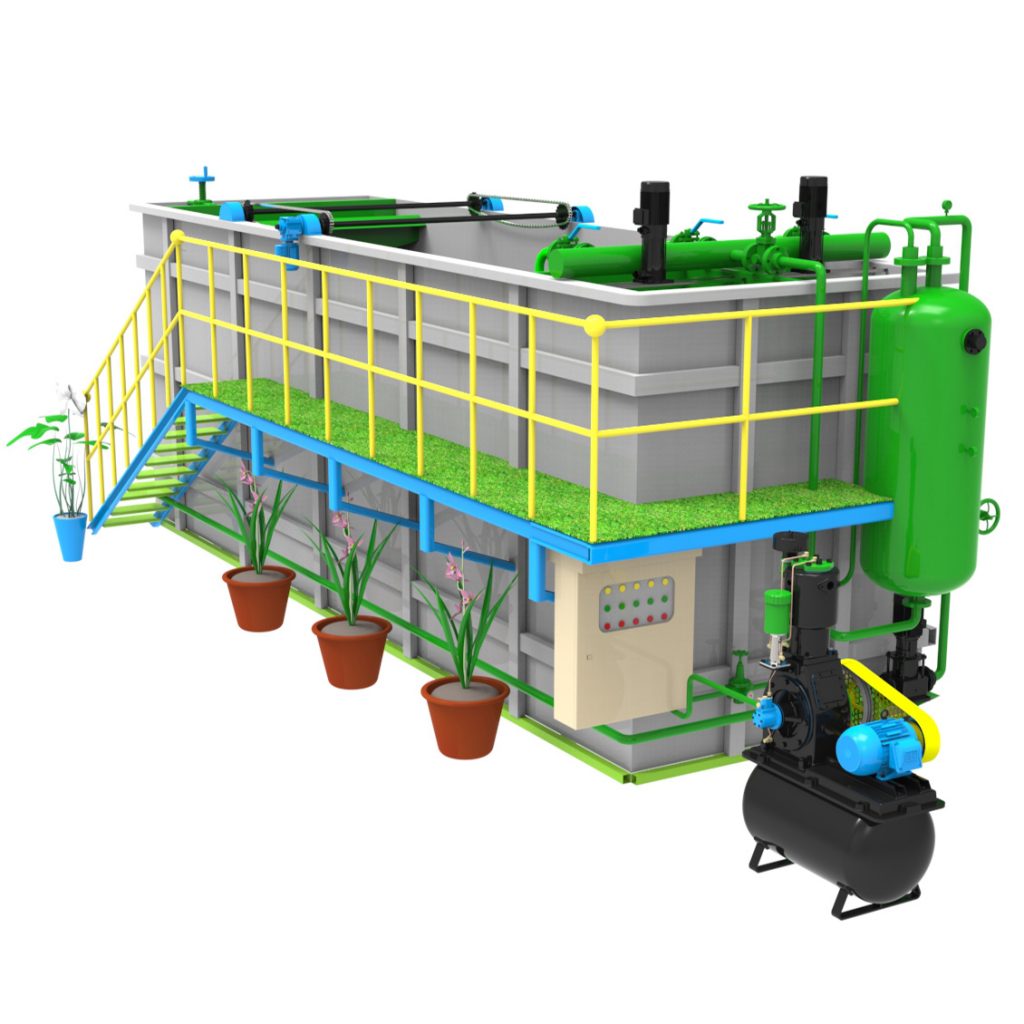
DAF System Including: Reaction Tank, Dissolved Air Tank, Dissolved Air Pressure Pump, Control System, Agitator, Slag Scraper, Pipes and Fitting, Ladder and Fence, Dosing System
Description:
The DAF System , high efficiency dissolved air flotation machine is composed of high efficient air dissolving system and designed according to the new-generation of solid-liquid separation technology, which make the Hinada dissolved air flotation equipment (DAF) very efficient in removing organic and inorganic suspended matters, flocs, phosphorus (p), oil and grease from industrial wastewater such as oil refining, chemical industry, brewing, vegetable oil production and refining, slaughtering, electroplating, printing and dyeing.
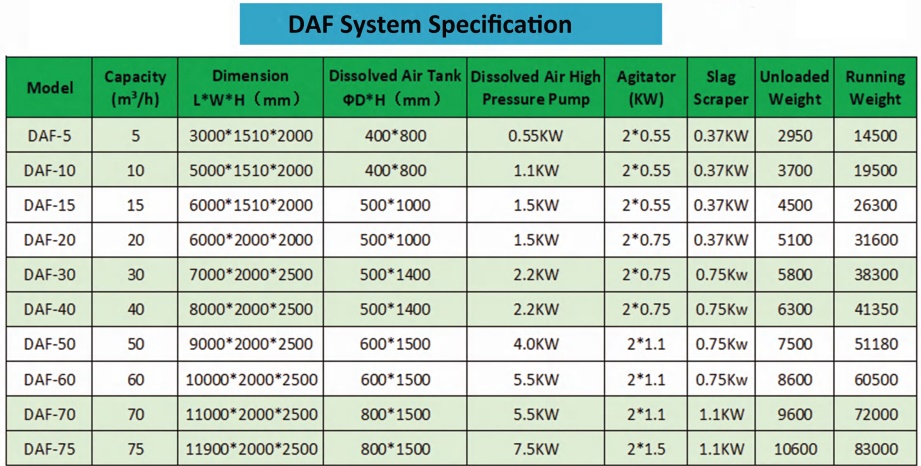
Product Specification
DAF System in food industry
Why DAF is Critical for Food & Beverage (F&B) Wastewater?
Food processing&Beverage effluents are characterized by high concentrations of FOG (Fats, Oils, and Grease), BOD/COD (Biochemical/Chemical Oxygen Demand), TSS (Total Suspended Solids), and fluctuating organic loads. Traditional gravity settling is ineffective here because many of these particles have a density close to water or are buoyant. DAF excels by forcing these particles to the surface for removal. without DAF System Removal the TSS and oil grease, then not possible for good biological treatment and further treatment.
DAF System Advantages:
- Oil and Grease: remove 70—90% of input
- Suspended matter: remove 50—80% / COD: low down 40%
- The DAF system utilises nano-scale air bubbles, also known as ‘White Water’, which attach themselves to the suspended material within the waste stream, increasing buoyancy and floating them to the surface. The floated solids are then removed by a simple but effective scraper mechanism.
- DAF System for emulsified oily and color removed need working with chemical
- Fast Separation with low Footprint
- Operation flexibility
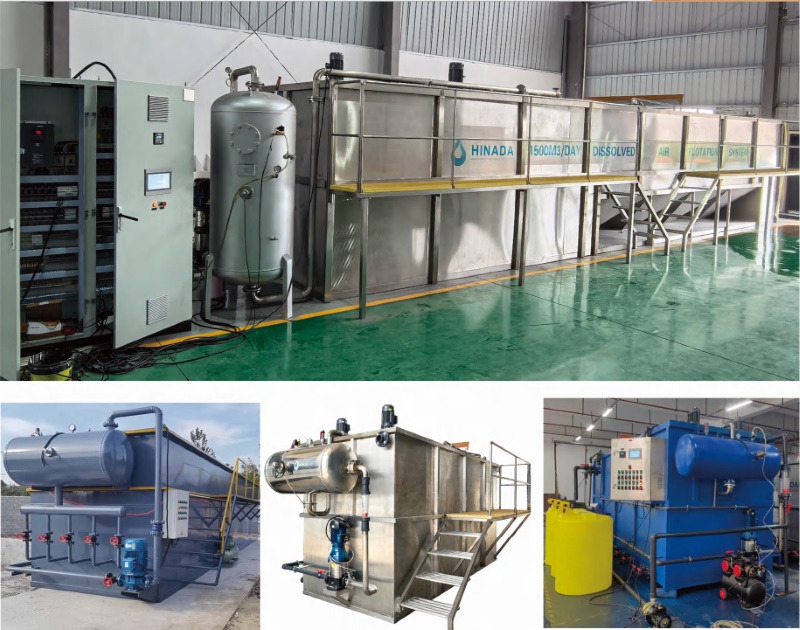
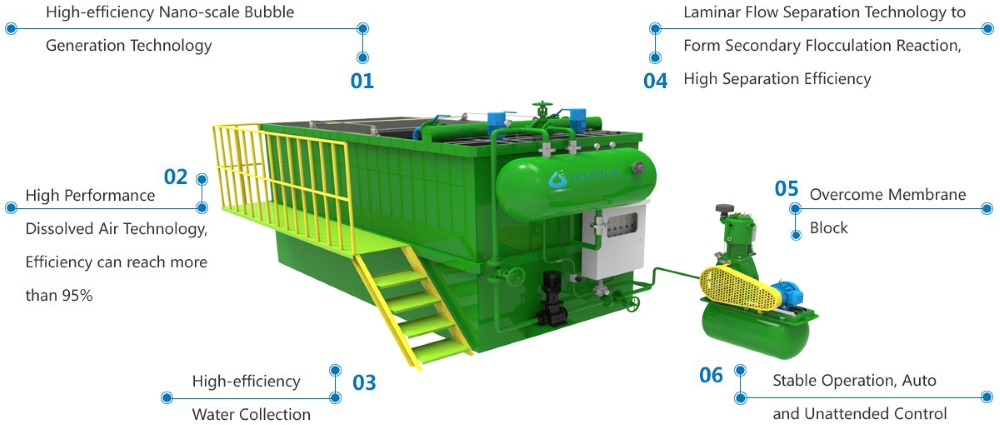
Dissolved Air Flotation System main feature
Our Service
- Hinada has 10 Years custom DAF System for wastewater treatment designing experiences
- Consult with Hinada as top and qualified DAF System supplier to obtain competitive pricing and system designs tailored or specific operational requirements.
- Offer installation and commissioning support.
DAF System Application
Food Processing Wastewater Oil and Gas Wastewater
Pulp and Paper Mill Effluent Chemical Manufacturing Wastewater
Textile Wastewater Pharmaceutical Wastewater
Mining and Metal Processing Wastewater Municipal Wastewater Treatment Plant
DAF System Benifits
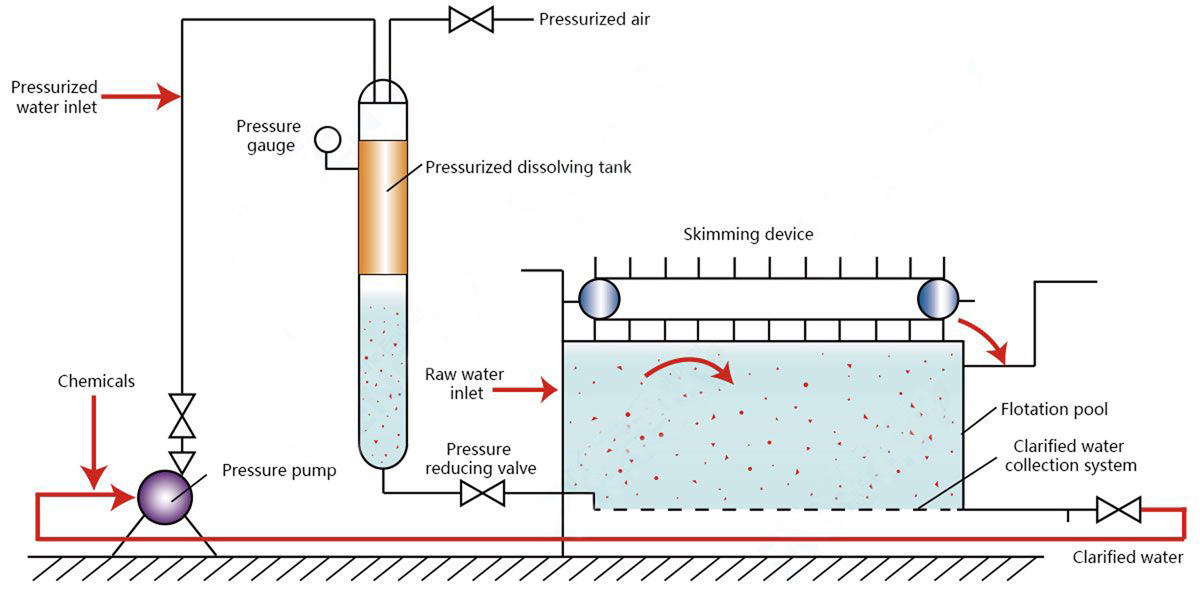
Dissolved Air Flotation System with the purpose to reduce and remove or low down the COD, TSS and FOG from industrial wastewater. The DAF system utilises fine air bubbles, also known as ‘White Water’, which attach themselves to the suspended material within the waste stream, increasing buoyancy and floating them to the surface. The floated solids are then removed by a simple but effective scraper mechanism. More often than not chemical conditioning is used to increase the effectiveness of the Dissolved Air Flotation process.
The Dissolved Air Flotation process uses the most reliable and positive method of producing air bubbles of the optimum size. This is done by dissolving air into water under pressure and then dropping the pressure on entry to the DAF cell using a controlled nozzle orifice. As the pressure is reduced, the air naturally comes out of solution in the form of micro bubbles.
* Hinada has 10 Years custom DAF System for wastewater treatment designing experiences, we can design and install as your any project requirements, reduce your projects investing cost.
* Standard designs according your application, requirement and budget, we are one of leading DAF system manufacturers in China, we can produce and accept any special requirement orders.
Packaging
Plywood case packed or in container loading.
Frequently Asked Questions
- Can the 1500 m³/day DAF system meet final discharge limits by itself?
Definitely can not , DAF System is pretreatment and effective for suspended solids, fats, and associated organic matter, but soluble COD, BOD, TDS and nutrients may remain. Most high-strength food wastewaters require additional treatment.
2. Why is a 75 m³/hour unit proposed for 1500 m³/day?
The average flow over 24 hours is 62.5 m³/hour. A preliminary 75 m³/hour design as 20 hours working time, if case other emergency issue happened or peak flow, solids loading, and Equipment Maintenance.
3. Does DAF require chemicals?
Many food wastewater applications benefit from coagulation and flocculation, or maybe need PH Adjust. Some free fats and floatable solids may separate without chemicals, but dependable performance should be established through testing.
3. Is the equipment fully automatic?
PLC controls can automate control feed pumps according to water level detector, high level working low level stop, dosing pump, High Pressure pump, and scraper cycles all interconnected.
4. Can DAF-treated water be reused in food production?
DAF effluent alone should not be assumed suitable for food contact or potable use. Reuse requires application-specific treatment, monitoring, and compliance with relevant food-safety and water-quality requirements.
5. Request a 750 m³/day Food Wastewater Treatment Proposal
Send HINADA your wastewater analysis, production schedule, daily and peak flow, discharge requirements, site layout, and available utilities.
Discuss a DAF package designed around your wastewater—not just a nominal flow rate.**
HINADA — Water is life, treat it right.
- Specifications
-
Product Specification
DAF System in food industry
Why DAF is Critical for Food & Beverage (F&B) Wastewater?
Food processing&Beverage effluents are characterized by high concentrations of FOG (Fats, Oils, and Grease), BOD/COD (Biochemical/Chemical Oxygen Demand), TSS (Total Suspended Solids), and fluctuating organic loads. Traditional gravity settling is ineffective here because many of these particles have a density close to water or are buoyant. DAF excels by forcing these particles to the surface for removal. without DAF System Removal the TSS and oil grease, then not possible for good biological treatment and further treatment.DAF System Advantages:
- Oil and Grease: remove 70—90% of input
- Suspended matter: remove 50—80% / COD: low down 40%
- The DAF system utilises nano-scale air bubbles, also known as ‘White Water’, which attach themselves to the suspended material within the waste stream, increasing buoyancy and floating them to the surface. The floated solids are then removed by a simple but effective scraper mechanism.
- DAF System for emulsified oily and color removed need working with chemical
- Fast Separation with low Footprint
- Operation flexibility
Dissolved Air Flotation System main feature
Our Service
- Hinada has 10 Years custom DAF System for wastewater treatment designing experiences
- Consult with Hinada as top and qualified DAF System supplier to obtain competitive pricing and system designs tailored or specific operational requirements.
- Offer installation and commissioning support.
- Application
-
DAF System Application
Food Processing Wastewater Oil and Gas Wastewater
Pulp and Paper Mill Effluent Chemical Manufacturing Wastewater
Textile Wastewater Pharmaceutical Wastewater
Mining and Metal Processing Wastewater Municipal Wastewater Treatment Plant
- Benefits
-
DAF System Benifits
Dissolved Air Flotation System with the purpose to reduce and remove or low down the COD, TSS and FOG from industrial wastewater. The DAF system utilises fine air bubbles, also known as ‘White Water’, which attach themselves to the suspended material within the waste stream, increasing buoyancy and floating them to the surface. The floated solids are then removed by a simple but effective scraper mechanism. More often than not chemical conditioning is used to increase the effectiveness of the Dissolved Air Flotation process.
The Dissolved Air Flotation process uses the most reliable and positive method of producing air bubbles of the optimum size. This is done by dissolving air into water under pressure and then dropping the pressure on entry to the DAF cell using a controlled nozzle orifice. As the pressure is reduced, the air naturally comes out of solution in the form of micro bubbles.
* Hinada has 10 Years custom DAF System for wastewater treatment designing experiences, we can design and install as your any project requirements, reduce your projects investing cost.
* Standard designs according your application, requirement and budget, we are one of leading DAF system manufacturers in China, we can produce and accept any special requirement orders. - Packaging
-
Packaging
Plywood case packed or in container loading.
- FRQ
-
Frequently Asked Questions
- Can the 1500 m³/day DAF system meet final discharge limits by itself?
Definitely can not , DAF System is pretreatment and effective for suspended solids, fats, and associated organic matter, but soluble COD, BOD, TDS and nutrients may remain. Most high-strength food wastewaters require additional treatment.
2. Why is a 75 m³/hour unit proposed for 1500 m³/day?
The average flow over 24 hours is 62.5 m³/hour. A preliminary 75 m³/hour design as 20 hours working time, if case other emergency issue happened or peak flow, solids loading, and Equipment Maintenance.
3. Does DAF require chemicals?
Many food wastewater applications benefit from coagulation and flocculation, or maybe need PH Adjust. Some free fats and floatable solids may separate without chemicals, but dependable performance should be established through testing.
3. Is the equipment fully automatic?
PLC controls can automate control feed pumps according to water level detector, high level working low level stop, dosing pump, High Pressure pump, and scraper cycles all interconnected.
4. Can DAF-treated water be reused in food production?
DAF effluent alone should not be assumed suitable for food contact or potable use. Reuse requires application-specific treatment, monitoring, and compliance with relevant food-safety and water-quality requirements.
5. Request a 750 m³/day Food Wastewater Treatment Proposal
Send HINADA your wastewater analysis, production schedule, daily and peak flow, discharge requirements, site layout, and available utilities.
Discuss a DAF package designed around your wastewater—not just a nominal flow rate.**
HINADA — Water is life, treat it right.
- DAF System Video
-
Send Inquiry To Us
Preparation and inspection before operation :
1.1 Check whether the inlet water pump , dissolved air pump , and air compressor are normal or not , whether the steering of the motor is consistent , and whether the oil level is normal . At the same time , check the slag scraper , run it empty , check whether its transmission part is normal ; add enough oil when the oil level is insufficient ; whether the scraper is flexible ; whether the driving speed is normal ; whether the contact switch is sensitive ; whether the wire is installed or not normal ;
1.2 Prepare chemical dosing as required , and check whether the front dosing device is normal .
1.3 Check the performance of each valve and whether the pressure gauge is normal .
1.4 Check the releaser to ensure the integrity and smoothness of its performance .
1.5 Fill the DAF container with clean water .
-
Start running :
2.1 Supply gas and water to the dissolved air tank . Control the water level in the tank at 1/3~1/2 elevation . Control the pressure in the tank at about 0.4MPa.
tart the DAF inlet pump , and control the amount of water , coagulant and focculant added .
2.3 Open the water outlet valve of the dissolved air tank and control the amount of released water .
2.4 Control the water level of the air flotation tank to prevent the scum from overflowing .
2.5 When the scum accumulates to a certain thickness , increase the scum level appropriately , and start the slag scraper when the scum overflows slightly . After scraping away a certain amount of slag , stop the scraper , lower the water level appropriately , and then let the slag accumulate to a certain thickness , and scrape the slag periodically .
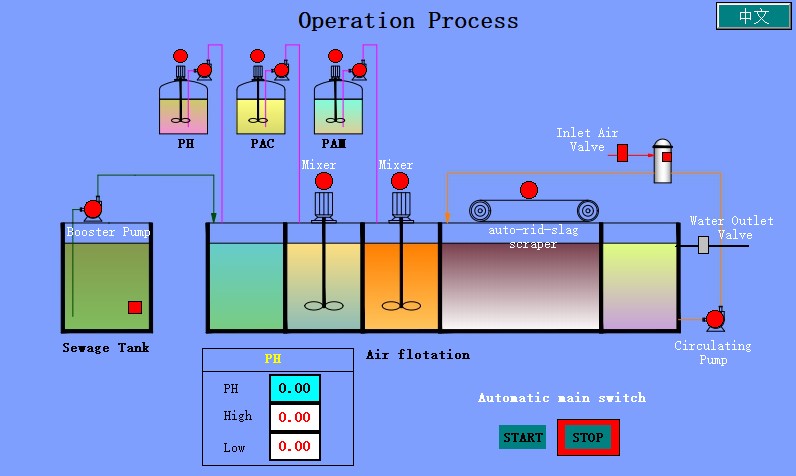
- PH value set between 7.5—8, Low =7.5, if low than 7.5 then add NaOH, High= 8.0, High than 8 stop.
- PAC: make the liquid solution with 480mg/L in tank
- PAM: make the liquid solution with 30mg/L in tank
- NaOH: make the liquid solution with 850mg/L in tank
- Raw Water Float Level detector, high level booster pump start, all the equipment