
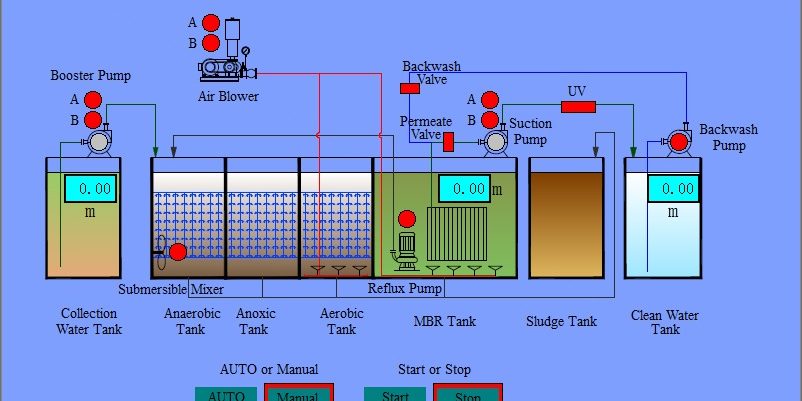
Groundwater can look perfectly clean when it comes from a borewell or well. But appearance alone does not tell you whether the water is suitable for drinking.
While passing through the soil and rocks, the water collects various minerals and other materials. In some areas, groundwater contains too much iron or manganese. In others, hardness, fluoride, nitrate, arsenic or microorganisms can become a concern. Farming, industrial activity, and poor well protection can also affect groundwater quality.
This is where a drinking water treatment system becomes important. The system treats the water according to the contaminants found in the source and helps produce water that meets the required drinking-water quality.
The important part is that there is no universal treatment setup for every well. The right process starts with understanding the water.
What Is a Drinking Water Treatment System?
A drinking water treatment system is a group of treatment processes used to improve raw water quality before people use it for drinking.
Depending on the source, the system may remove suspended particles, dissolved minerals, metals, organic compounds or microorganisms. Some systems use simple filtration, while others need membrane treatment, softening, or disinfection.
For example consider two groundwater wells.
The first well may have clear water but very high hardness. The second may have a noticeable iron problem and microbial contamination. Both are groundwater sources, but treating them in exactly the same way would not make much sense.
Water testing helps identify these differences. Once the results are available, the treatment process can be designed around the real condition of the groundwater.
Read Also: Drinking Water System UF Technology 1000 m3 per Day
Why Does Groundwater Need Treatment Before Drinking?
The groundwater gets its minerals naturally from the rocks and soils through which it flows. This is one reason why water from two wells in nearby areas can have very different characteristics.
A well can also become affected by activities around it. Fertilizers, wastewater, industrial discharge, damaged well structures, and surface contamination can all create water-quality problems.
Some of the issues commonly found in groundwater include:
Iron and Manganese: Iron is one of the more noticeable groundwater problems. Water with excess iron may leave orange or brown stains on sinks, bathroom fixtures, and clothes. It can also affect taste. Manganese can cause similar problems and may leave dark deposits on plumbing and fixtures. A treatment process designed for iron and manganese can reduce these metals before the water reaches the drinking-water stage.
Hardness: Hard water contains minerals such as calcium and magnesium. You might have observed its presence when soap doesn’t lather or when white deposits begin to form around taps and heaters. Water hardness does not necessarily indicate water unfit for consumption, although hardness to excess may bring about some operational and maintenance difficulties. Water softening can help control these issues.
Fluoride: Fluoride can occur naturally in groundwater, particularly in certain geological areas. If testing shows a concentration above the applicable drinking-water requirement, the treatment system may need a process specifically designed to reduce fluoride.
Nitrate: Nitrate can enter groundwater from agricultural fertilizers, wastewater, and other sources. This issue deserves attention because groundwater can appear completely normal even when nitrate levels are elevated. Laboratory testing is therefore important when the surrounding area has a potential nitrate source.
Arsenic: Arsenic can occur naturally in some groundwater because of the local geology. Certain industrial and agricultural activities can also contribute to contamination. If testing finds arsenic, the treatment system needs a process that specifically targets it.
Suspended Solids: Groundwater has less particulate matter compared to surface water. Sediment may contaminate a well for various reasons. These include the physical state of the well, well pumping activities and the nature of the soil around the well. These particles can be removed through filtration.
Microorganisms: People sometimes assume that groundwater is naturally protected from bacteria and other microbes. That is not always the case. A poorly sealed well, flooding, damaged pipes, or nearby contamination can introduce microorganisms into the water. Disinfection can provide an important safety barrier.
Read Also: Why Industrial Reverse Osmosis Systems Are Essential for Clean, Safe Water
How Does a Drinking Water Treatment System for Groundwater Work?
There is no single process that fits every groundwater source. However, a common treatment system may follow this sequence:
Groundwater Intake → Pretreatment → Filtration → Advanced Treatment → Disinfection → Treated Drinking Water
Here is what happens at each stage.
Groundwater Intake: This process begins when the groundwater is supplied to the water treatment plant through the wells or boreholes.Operators need to know the characteristics of the raw water before choosing any equipment. These include characteristics like pH, TDS, hardness, iron, manganese, turbidity and microbial quality.
Pretreatment: Pretreatment serves to prepare water before its further purification. According to the source of water, this process may involve screening, aeration, oxidation and other types of conditioning. In some cases, if the groundwater has a high level of iron content, then the pretreatment process can be helpful in converting it to an easily removable form.
Filtration: The water is subjected to a filtering process next. Sand or media filters can trap suspended solids and sediments. In some systems, filtration also follows an oxidation process to remove substances such as iron and manganese.
Advanced Treatment: This is where the treatment process becomes more specific to the water problem. A softener may be used for hard water. UF systems may provide a membrane barrier for fine particles and microorganisms. RO may be considered when the groundwater contains high TDS or dissolved contaminants that need membrane separation. The system does not necessarily need all of these technologies.
Disinfection: After the main treatment stages, the water may undergo disinfection. Ultraviolet radiation and chlorination are popular choices. UV utilizes ultraviolet rays for disinfection of organisms, whereas chlorination may even offer residual protection if the distribution system is suitably designed.
Treated Drinking Water: Water that has undergone treatment will be ready to move into the storage tank or distribution network.
It is important to remember that the quality of groundwater changes with time. Treatment equipment also needs monitoring and maintenance to keep performing as expected.
Read Also: Get a Brief Idea of the UF Technology and UF Systems
Key Treatment Technologies for Groundwater
Different treatment technologies solve different problems. The table below provides a simple reference.
| Treatment Technology | Main Purpose | Common Groundwater Application |
| Sand/Media Filtration | Removes suspended particles | Sediment and turbidity |
| Activated Carbon | Reduces certain organic compounds and taste/odor | Organic contamination and taste/odor concerns |
| Iron & Manganese Removal | Reduces dissolved metals | Groundwater with elevated iron or manganese |
| Water Softening | Reduces hardness | Hard groundwater |
| Ultrafiltration (UF) | Removes fine particles and microorganisms | Microbial and suspended-solid control |
| Reverse Osmosis (RO) | Reduces dissolved salts and selected contaminants | High TDS and specific dissolved contaminants |
| UV Disinfection | Inactivates microorganisms | Microbial control |
| Chlorination | Controls microorganisms | Drinking-water disinfection |
Sand and Media Filtration: A media filter is relatively straightforward: water passes through a bed of filter material, and particles become trapped as the water moves through it. This process of filtration is very efficient when sedimentation and turbidity are the major problems.
Activated Carbon Filtration: Activated carbon is useful for reducing organic compounds and improving taste and odor.
It is not a universal solution, though. If a groundwater test shows high hardness or dissolved salts, carbon filtration will not solve those problems.
Iron and Manganese Removal: Iron and manganese usually require a treatment process designed specifically for their chemistry. Depending on the water, the process may use oxidation followed by filtration. The exact approach depends on factors such as concentration, pH, and the form in which the metals occur.
Water Softening: A water softener mainly addresses calcium and magnesium hardness. It can reduce scale formation and help protect plumbing, heaters, and other equipment connected to the water supply.
Ultrafiltration (UF): The ultrafiltration water system uses a membrane to separate very small particles and microorganisms from water. It can work as a useful filtration barrier, particularly when the groundwater contains suspended solids or microbial contamination that the system needs to control.
Reverse Osmosis: RO pushes water through a semipermeable membrane under pressure. The membrane reduces dissolved salts and a range of other contaminants. But not every groundwater source needs RO. If testing shows that the main problem is hardness, iron, or microorganisms, a more targeted treatment process may be sufficient. Adding RO without a clear reason can increase energy use, membrane maintenance, and operating costs.
UV Disinfection: UV treatment uses ultraviolet light to inactivate microorganisms. It does not remove hardness, iron, or dissolved salts. Its job is microbial control, so it normally forms one part of a wider treatment system.
Chlorination: Chlorination uses chlorine-based disinfectants to control microorganisms. One practical advantage is that chlorine can maintain a residual in the distribution system when the system is correctly designed and operated.
How to Choose a Drinking Water Treatment System for Groundwater
Choosing a system should not start with a list of equipment. It should start with a water-quality report.
Start With a Water Test: A laboratory analysis tells you what the groundwater actually contains. This information can prevent unnecessary treatment. For example, there is little reason to install an RO system simply because the water comes from a borewell if the test does not show a problem that requires RO.
Look at Contaminant Concentrations: The concentration matters just as much as the presence of a contaminant. Knowing that iron is present does not tell you whether you need a simple treatment stage or a more extensive iron-removal process.
Consider Water Demand: A system serving a small building will not have the same capacity requirements as one supplying an entire community. Look at daily water consumption as well as peak demand before sizing pumps, filters, membranes, and storage tanks.
Check TDS and Hardness: TDS and hardness can strongly influence the treatment approach. High hardness may point toward softening, while high TDS or particular dissolved contaminants may make RO worth considering.
Consider Microbial Quality: If the laboratory report identifies microbial contamination, the treatment system needs an appropriate disinfection step. It is also worth checking the well itself. Treatment cannot fully compensate for a poorly protected water source.
Think About Maintenance: A treatment system needs more than an installation team. Filters need servicing. Membranes may need cleaning. Chemical systems require monitoring. UV equipment needs inspection, and water quality needs regular testing. A system that looks good on paper but is difficult to maintain can create problems later.
Consider Space and Energy: Treatment equipment takes up physical space. RO systems and pumping equipment can also increase energy consumption. These factors should be considered during the design stage rather than after installation.
Read Also: industrial ro system operation process for drinking or industry application
Example: Groundwater Treatment for a Small Community
Consider a small community that gets its drinking water from a groundwater well. The residents have noticed reddish marks around their sinks and plumbing fixtures. A laboratory test then reveals high iron, high hardness, and microbial contamination. Instead of trying to solve everything with one piece of equipment, the community could use a treatment train such as:
Groundwater → Iron Removal → Softening → Filtration → Disinfection → Drinking Water Storage
The iron-removal stage handles the iron problem. The softener addresses hardness. Filtration provides another physical treatment barrier, while disinfection deals with microorganisms before the water enters storage. This is only an example, not a standard recipe for every community. If another well has high fluoride or nitrate instead, its treatment process may look completely different. That is why laboratory testing should guide the final design.
Drinking Water Treatment System vs. Groundwater Treatment System
These terms can sometimes refer to overlapping systems, but their scope differs.
| Factor | Drinking Water Treatment System | Groundwater Treatment System |
| Water source | Groundwater or surface water | Groundwater |
| Main challenge | Depends on the water source | Often involves dissolved minerals and site-specific contaminants |
| Treatment approach | Selected according to raw-water quality | Usually designed around groundwater chemistry |
| Common technologies | Filtration, UF, RO, disinfection | Iron removal, softening, UF, RO, disinfection |
In simple terms, a groundwater treatment system focuses on the characteristics of groundwater. When the treated water is intended for drinking, the system must also meet the relevant drinking-water requirements.
Benefits of a Proper Groundwater Treatment System
A properly designed system can make a noticeable difference in everyday water quality. It can:
- Reduce unwanted minerals and contaminants.
- Improve water appearance where iron or sediment causes problems.
- Improve taste and odor where the treatment technology addresses the cause.
- Reduce scale-related problems caused by hard water.
- Control microorganisms through appropriate disinfection.
- Provide more consistent water quality.
- Support drinking-water supplies for communities and commercial facilities.
The real benefit comes from using the right treatment for the right problem.
Frequently Asked Questions
What is a drinking water treatment system for groundwater?
It is a treatment system designed to improve groundwater quality so the water can meet the requirements for its intended drinking use. The system may combine filtration, iron removal, softening, membrane treatment, and disinfection depending on the water-quality results.
What contaminants can a groundwater treatment system remove?
A properly selected system can address contaminants such as iron, manganese, hardness, suspended solids, microorganisms, dissolved salts, fluoride, nitrate, or arsenic.
The exact contaminants that a system can remove depend on the treatment technology used.
Does groundwater always need RO treatment?
No, RO is not automatically required for groundwater. RO can be useful when testing shows high TDS, dissolved salts, or specific contaminants that require membrane treatment. Other problems may need softening, iron removal, filtration, or disinfection instead.
How do you remove iron from groundwater for drinking?
Iron can be treated through processes such as oxidation followed by filtration. The appropriate method depends on the iron concentration, pH, water chemistry, and the form of iron present.
What is the best treatment for hard groundwater?
Water softening is commonly used to reduce calcium and magnesium hardness. If the groundwater also contains high TDS or other dissolved contaminants, the treatment design may include additional processes such as RO.
How do you disinfect groundwater for drinking?
UV and chlorination are commonly used for groundwater disinfection. UV inactivates microorganisms using ultraviolet light. Chlorination uses a disinfectant and can provide residual protection in a distribution network when properly managed.
How do I choose the right drinking water treatment system for groundwater?
Start with a complete laboratory water analysis. Then consider the contaminant levels, required water flow, intended drinking-water quality, TDS, hardness, microbial quality, available space, energy requirements, and maintenance needs.
The final treatment train should reflect the actual groundwater rather than follow a standard equipment list.
Conclusion
Groundwater treatment is not simply about putting a filter between a well and a storage tank. The quality of groundwater can vary significantly from one location to another, so the treatment process needs to match the water.
A good starting point is a laboratory analysis. The results can show whether the source needs iron removal, softening, filtration, UF, RO, disinfection, or a combination of these processes.
A well-designed drinking water treatment system for groundwater should address the identified contaminants while also considering flow rate, operating cost, maintenance, and the required drinking-water quality.
In the end, Hinada Water Treatment focuses on practical solutions that properly treat the water, avoiding unnecessary treatment technologies that the source does not actually require.