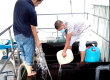
- Overview
This procedure applies to the MBR membranes used in wastewater treatment system. The membranes are cleaned once per year as part of routine maintenance. The purpose is to remove organic, biological, and inorganic foulants, restore membrane permeability, reduce transmembrane pressure (TMP), and extend membrane service life.
Although commonly referred to as CIP, this is an offline / in-tank chemical cleaning procedure because the tank is drained and the membranes are soaked in cleaning solutions. The complete cleaning typically requires two technicians and two days.
- Safety and Pre-Cleaning Requirements
- Isolate the MBR system and apply lockout/tagout (LOTO) before work.
- Wear appropriate PPE: chemical goggles or face shield, acid/alkali-resistant gloves, apron, and boots.
- Ensure adequate ventilation. Gas station wastewater may contain volatile organics; monitor for flammable or toxic gases if required.
- Never mix acid with sodium hypochlorite. Acid addition to hypochlorite can release dangerous chlorine gas.
- Confirm chemical compatibility limits with the membrane manufacturer before cleaning, especially for chlorine concentration, pH, and temperature.
- Remove free oil/grease and floating debris, if present, before chemical cleaning.
- Neutralize and dechlorinate all waste cleaning solutions before discharge.
- Cleaning Chemicals and Equipment
- Sodium hypochlorite (NaOCl)
- Sodium hydroxide (NaOH)
- Citric acid
- Clean water or permeate
- pH meter and chlorine test kit
- Aeration blower / coarse-bubble diffusers
- Cleaning tank or isolated membrane tank
- Hoses, pumps, valves, PPE, and neutralization chemicals
- Cleaning Procedure
Step 1 – Drainage, Sludge Removal, and Pre-Rinse
- Shut down the MBR system and isolate the membrane tank.
- Pump out the tank water and transfer sludge to the sludge handling system.
- Remove loose sludge, debris, and floating oil/grease.
- Pre-rinse the membranes with clean water or permeate to remove gross solids.
- Drain the rinse water and inspect membranes, piping, and aeration diffusers.
Step 2 – Alkaline / Oxidative Cleaning
- Fill the tank with clean water until the membranes are fully submerged.
- Add sodium hypochlorite to a concentration of 2,000 ppm as available chlorine, or as recommended by the membrane manufacturer.
- Add NaOH to adjust the pH to approximately 11.
- Soak the membranes with gentle coarse-bubble aeration for about 6 hours.
- Monitor pH and chlorine concentration during soaking; adjust if necessary.
- Drain the cleaning solution to a neutralization or holding tank.
Step 3 – Intermediate Rinse
- Rinse the membranes and tank thoroughly with clean water or permeate.
- Continue rinsing until residual chlorine is low and the pH is near neutral, approximately 6–8.
- Drain the rinse water completely before proceeding to acid cleaning.
- This step is critical to prevent acid contact with residual hypochlorite.
Step 4 – Acid Cleaning
- Fill the tank with clean water.
- Add citric acid to a concentration of 1% w/w.
- Adjust the pH to approximately 1 using citric acid or NaOH if needed.
- Soak the membranes with gentle aeration for 5–6 hours.
- Monitor pH during soaking and maintain the target range.
- Drain the acid cleaning solution to the neutralization tank.
Step 5 – Final Rinse and Return to Service
- Rinse the membranes thoroughly with clean water or permeate.
- Continue rinsing until the pH is 6–8 and no residual cleaning chemicals remain.
- Drain the final rinse water.
- Restore valves, instruments, and aeration equipment.
- Perform a membrane integrity test or leak check if applicable.
- Restart the MBR system gradually and monitor TMP, permeability, and effluent quality.
- Key Control Parameters
| stage | chemical | Concentration | PH | Aeration | Duration |
| Alkaline / oxidative cleaning | NaOCl + NaOH | 2,000 ppm as available chlorine | 11 | Gentle coarse-bubble aeration | ~6 hours |
| Intermediate rinse | Clean water / permeate | — | Neutral, 6–8 | until neutral | |
| cid cleaning | Citric acid | 1% | 1 | Gentle aeration | 6 hours |
| Final rinse | Clean water / permeate | — | Neutral, 6–8 | — | until neutral |
- Manpower and Schedule
- Manpower: 2 technicians
- Duration: Approximately 2 days
- Day 1: Isolation, drainage, sludge removal, pre-rinse, alkaline/oxidative cleaning, intermediate rinse
- Day 2: Acid cleaning, final rinse, neutralization, system restoration, integrity check, and restart
- Waste Handling
- Dechlorinate NaOCl-containing waste using sodium thiosulfate or bisulfite.
- Neutralize acid waste with NaOH or another suitable alkali.
- Adjust combined waste to pH 6–9 before discharge.
- Comply with local discharge regulations for gas station wastewater treatment.
- Acceptance Criteria
- Final rinse water is neutral and free of residual chlorine.
- Membrane permeability or TMP is restored or improved.
- No leaks or integrity failures are detected.
- Effluent quality meets the required standard after restart.
- Cleaning records are completed, including chemical batches, pH, chlorine concentration, soaking time, rinse results, and maintenance photos.
- Optimization Notes
- Always follow the membrane manufacturer’s maximum chlorine exposure and pH limits.
- Use permeate for final rinsing where available to reduce contamination risk.
- Maintain a moderate cleaning temperature, typically 20–30°C, unless otherwise approved by the manufacturer.
- If fouling is severe, repeat the alkaline or acid stage separately, but avoid excessive chlorine exposure.
- Ensure uniform aeration without excessive air scouring that could damage the membranes.
- Keep acid and hypochlorite systems completely separated during storage, preparation, and cleaning.