How to Choose Packaged MBR System for Hotel Wastewater Treatment
Resort Hotel or in airport or close to sea, or remote area with good landscape, those remote communities without access to a municipal sewage system, it’s has to build the wastewater treatment plant by themselve. Hotel wastewater presents unique challenges: variable seasonal flows, high concentrations of fats, oils, and grease (FOG) from kitchens, and strict discharge or reuse requirements.
A packaged membrane bioreactor (MBR) system from Hinada offers a compact, automated solution—but selecting the right configuration requires careful evaluation. Here is a step-by-step guide.
1). Start with a Project-Specific Proposal, Not Nominal Capacity
The most critical step is to avoid selecting equipment based on a generic capacity figure alone. Hinada itself advises buyers to request a project-specific proposal that explains the recommended process, pretreatment requirements, equipment scope, and operating assumptions for your site. For a hotel, this means providing:
- Raw water quality test report
- Required output water quality standard
- Treatment capacity per hour or number of rooms
2). Determine the Right Treatment Capacity
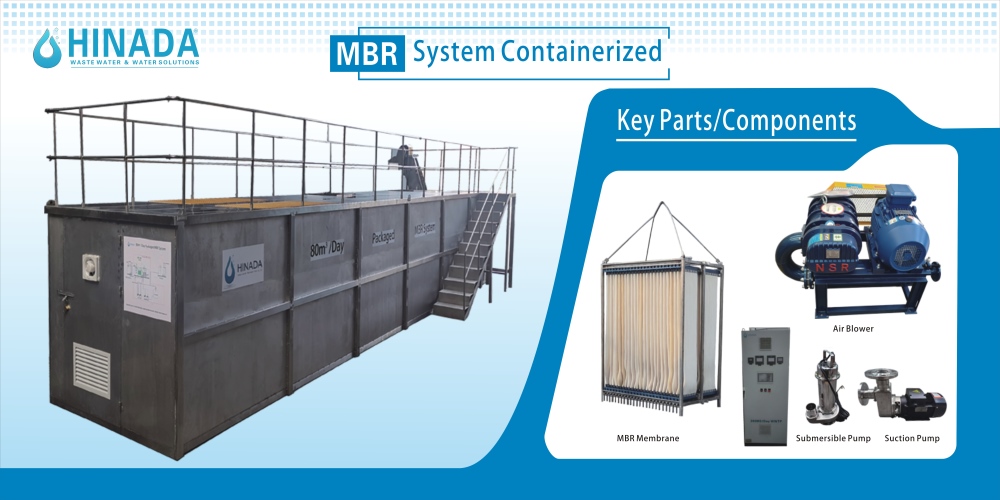
Hinada’s packaged MBR units typically range from 10 m³/day to 200 m³/day, with larger flows handled by multiple containers or custom designs. For a hotel, calculate capacity based on:
- Occupancy rate (peak vs. average)
- Restaurant and kitchen load (high FOG and organic content)
- Laundry and landscaping water demand
- Diurnal flow variations—hotels often have sharp morning and evening peaks
For example, a 200 m³/day system may have a peak capacity of around 240 m³/day, with the MBR designed to work at 10 m³/hour. Specify both average and peak flows in your inquiry.
3). Match Pretreatment to Hotel Wastewater Characteristics
Hotel wastewater contains hair, fibrous materials, and FOG that can clog membranes. Hinada recommends a pretreatment train including coarse bar screen, aerated grit and sand removal, fine screen, and coagulation where needed. For FOG, the target at the biological treatment inlet should be less than 5 mg/L—typical domestic FOG levels will not affect membrane performance if properly managed. If your hotel has a large kitchen, a dissolved air flotation (DAF) unit may be advisable as a pretreatment step.
4). Define Effluent Quality and Reuse Goals
MBR effluent is well-suited for irrigation, toilet flushing, and dust suppression because it produces low-suspended-solids water with consistent quality. Hinada systems can achieve turbidity below 0.2 NTU and remove bacteria and viruses. Clarify your discharge limits: if phosphorus or nitrogen removal is required, the MBR design should include anaerobic and anoxic tanks for biological nutrient removal. If dissolved-salt reduction is needed, reverse osmosis (RO) may be added downstream.
5). Evaluate Footprint and Installation Options
Hinada’s containerized MBR systems are fully preassembled and packaged in carbon steel containers with anti-corrosion painting (5–8 mm thickness), making them moveable and requiring minimal construction work. If your hotel has limited space—such as a basement or a compact service yard—confirm the exact footprint and available access for delivery and maintenance. For sites with very tight constraints, Hinada can also supply non-containerized integrated equipment.
6). Review Automation and Maintenance Requirements
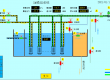
Hinada MBR systems use PLC control with HMI, automatic backwashing, dosing, alarms, and optional remote monitoring via SCADA or 4G. This level of automation reduces operator workload, but MBR still requires skilled maintenance for membrane cleaning and fouling control. Ask Hinada about:
- Membrane lifespan (typically 3–5 years with proper operation)
- Backwash pump specifications and cartridge filter needs
- Whether a frequency converter is recommended for your capacity
7). Consider Total Cost and Support
Packaged MBR systems have higher capital and operating costs than simple treatment systems, but they deliver superior effluent quality and a smaller footprint. When comparing quotes, look beyond the purchase price: factor in power consumption (e.g., 2.5–3.5 kW/h for 10–20 m³/day units), membrane replacement, chemical dosing, and remote support availability. Hinada provides guidance on pretreatment selection, MBR tank sizing, and mechanical design as part of the proposal process.
Quick Checklist Before You Buy
| Decision Point | What to Confirm |
| Capacity | Average & peak flow; number of rooms |
| Pretreatment | Screen, FOG removal, equalization |
| Effluent target | Discharge limits or reuse purpose |
| Footprint | Container dimensions & access |
| Automation | PLC, remote monitoring, alarms |
| Maintenance | Membrane life, cleaning access |
| Support | Project-specific proposal & after-sales |
Choosing a Hinada packaged MBR system for your hotel is not about picking the eqiupment unit only—it is about matching the process to your actual wastewater profile. By providing raw water data, effluent goals, and site constraints upfront, you enable Hinada to deliver a proposal that works reliably for years, not just on paper.