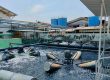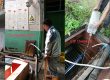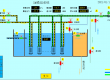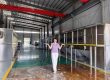
Industrial Ultrafiltration Membranes for river water filtration
Ultrafiltration membranes are capable of separating larger materials such as colloids, particulates, fats, bacteria, and proteins, while allowing sugars, and other low molecular weight molecules to pass through the membrane.
With a pore size range between 0.01 to 0.1µm, ultrafiltration membrane pore sizes fall between that of nanofiltration and microfiltration. UF membranes typically operate between 50 – 120 PSI (3.4 – 8.3 bar) and are dependent on transmembrane pressure to drive the separation process.
Ultrafiltration is an excellent separation technology for desalination pretreatment, reverse osmosis pretreatment, and wastewater reclamation, as well as for producing potable water.
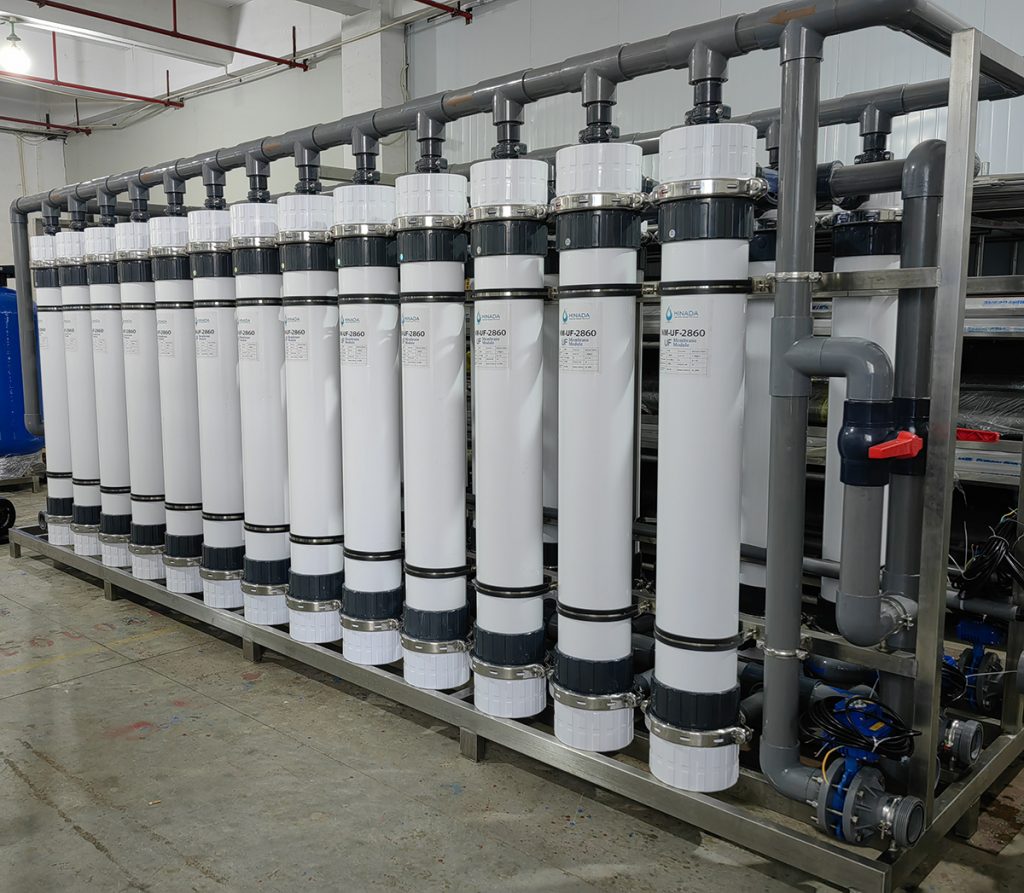
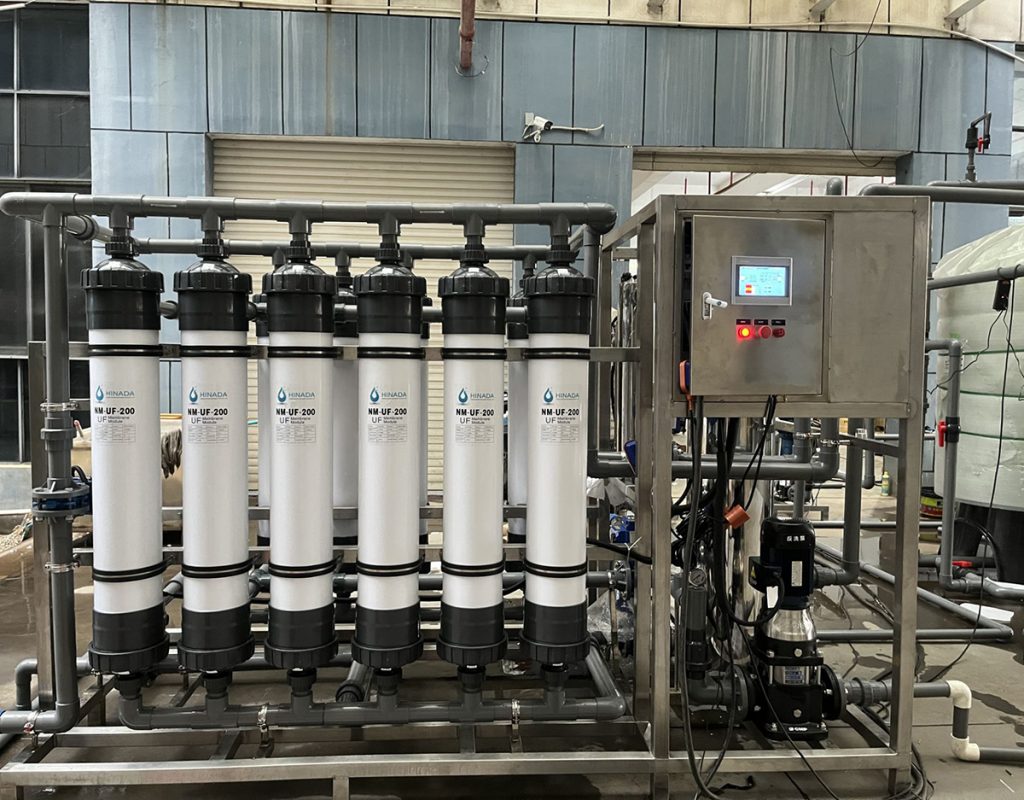
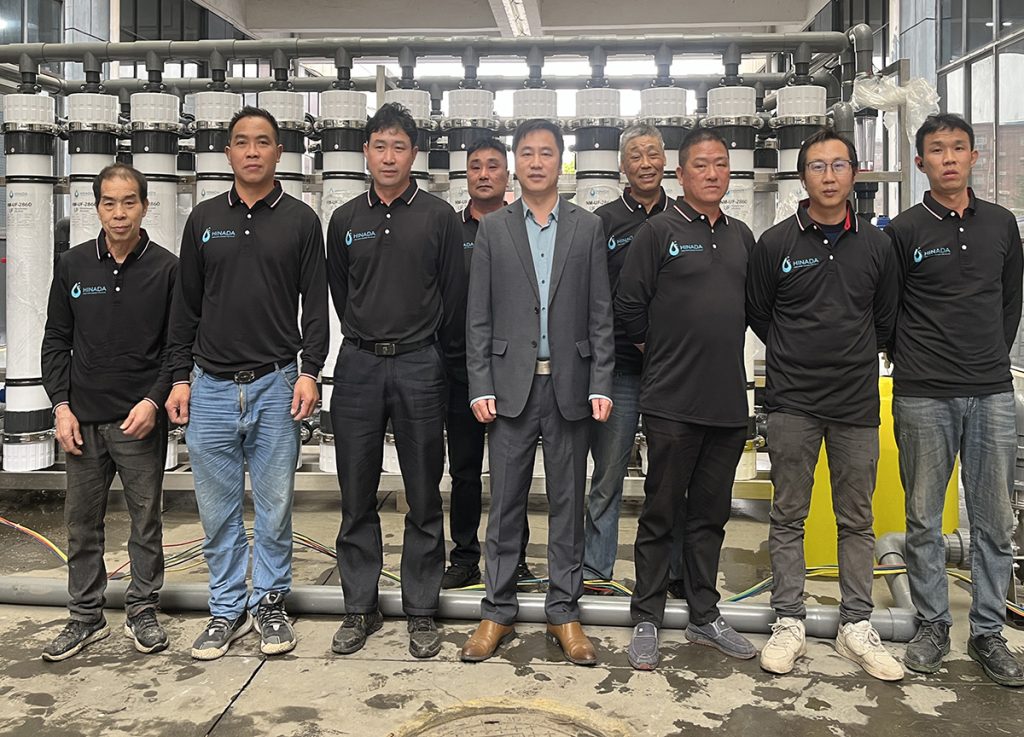
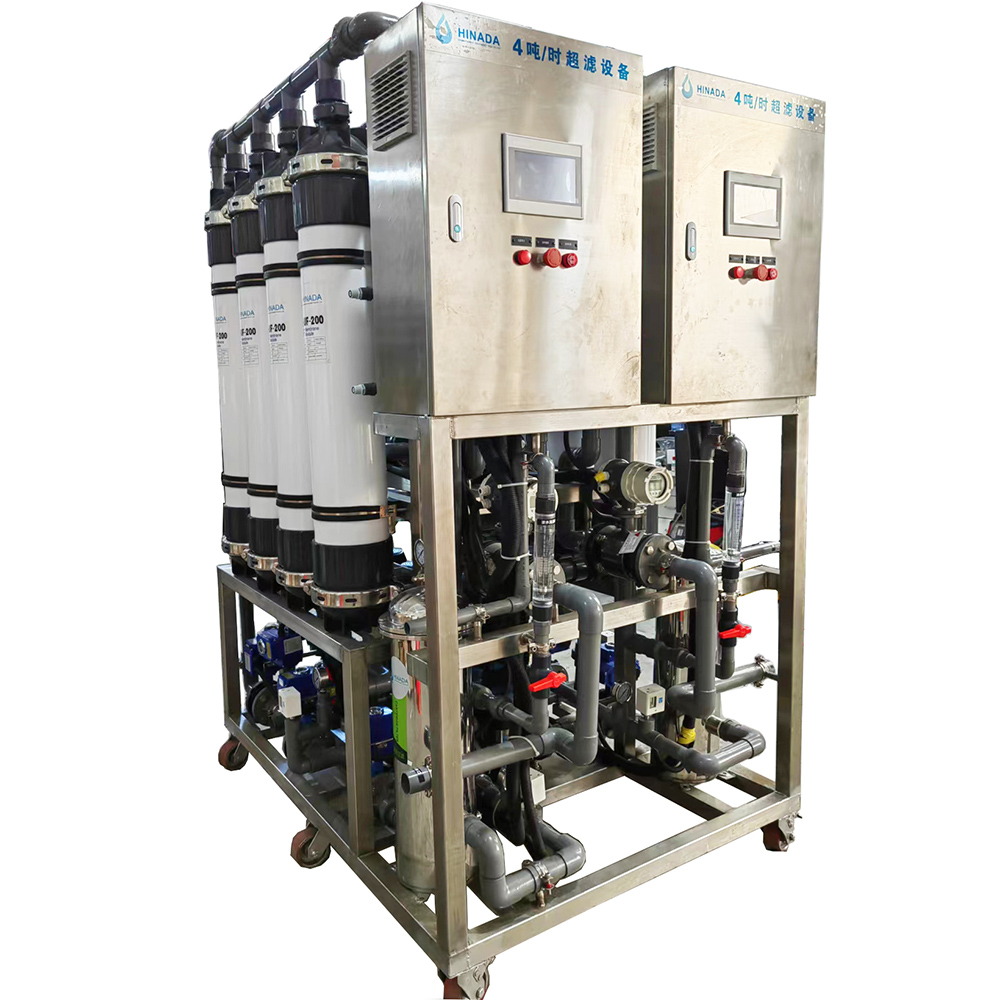
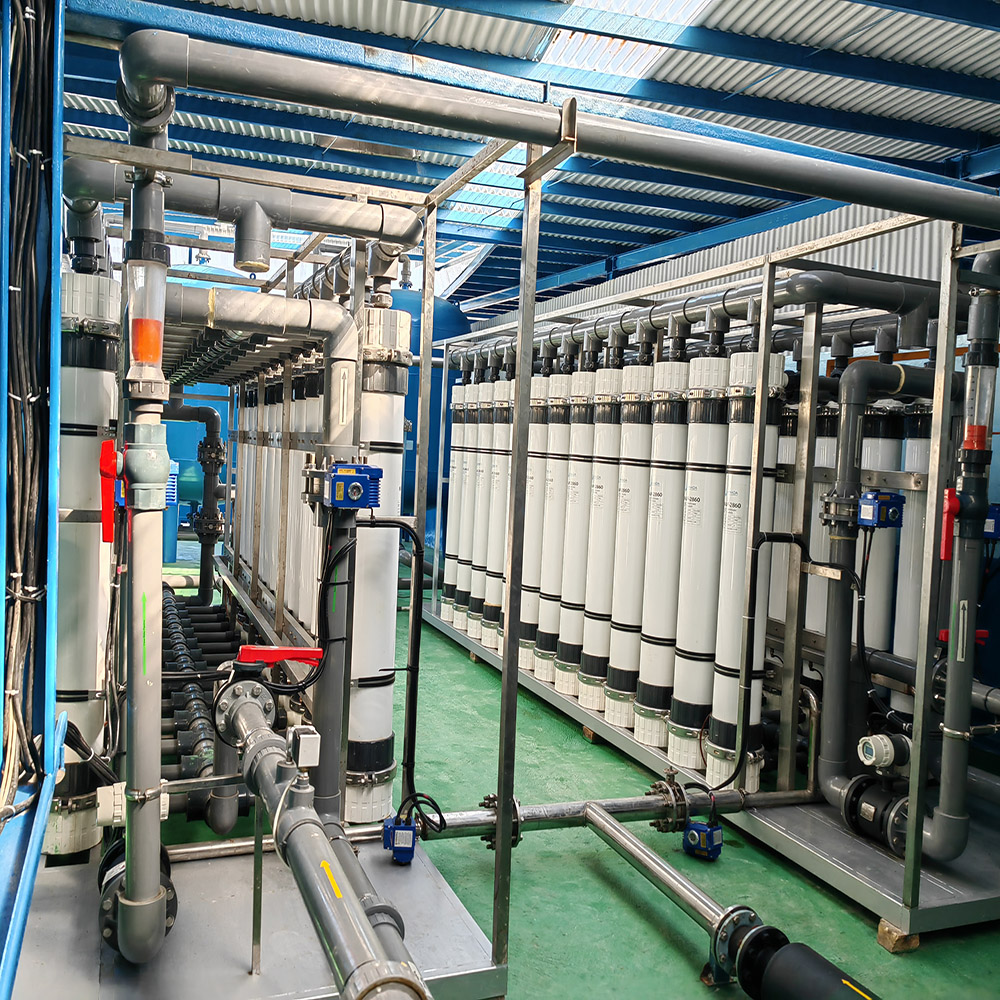
Ultrafiltration plant are build with, which hollow fiber outside-in or inside-out membranes, Hinada, we are the ultrafiltration (UF) system manufacturer, we can manufacture UF plant as any your requirements for your water treatment projects.
- High and consistent product quality measured by turbidity (NTU) or silt density index (SDI).
- Tolerance to feedwater quality upsets.
- No use of pretreatment chemicals (polymer, coagulant, pH adjustment) and associated costs for sludge disposal.
- Small footprint and less weight than media filters.
Application of NM-UF Series of membrane module:
◇Surface water and underground water treatment
◇Drinking water treatment and pretreatment for RO system
◇ Industrial water treatment and reuse
◇ Water Recycling
◇ Pretreatment of seawater desalination
Working conditions and requirements
|
|
Items | parameters | Remarks
|
| Normal pretreatment | PP filter;
Sand Filtering+ Activated carbon Filtering+PP Filtering |
The pretreatment combination can be selected according to the raw water condition | |
| Maximum Input Turbidity | ≤15NTU(PVCmembrane)
≤50NTU(PVDF membrane) |
The pretreatment and PP filtering are required if the turbidity of filtration inlet water is greater than the standard value | |
| Filtration method | Dead-end or Cross flow | Dead-end will be suggested if the turbidity≤5NTU,otherwise the cross flow will recommended. The higher the turbidity is, the greater the cross flow is and the cross flow rate is 10% – 50% of the inflow | |
| Inlet pressure | 0.1-0.3MPA | Under the condition of meeting the design permeating rate, the smaller the inlet pressure is, the lower the fouling rate of membrane module is | |
| Transmembrane pressure difference at 20℃(TMP) | 0.028-0.15MPA | The chemical cleaning will be required if the TMP reaches 0.1MPA | |
| Maximum Transmembrane pressure difference(TMP) | 0.2MPA | The lower the TMP is, the longer the membrane can use | |
| Temp | 5-45℃ | If the temperature is too high, the epoxy resin of the membrane will be denatured and invalid; if the temperature is too low, it will cause the membrane to freeze and solidify | |
| PH Range | 2-12 | Strong PH will affect the actual flux rate and service life of the membrane. If necessary, adjust the PH of the original water | |
| Tolerance of Residual chlorine concentration | 100PPM | If the residual chlorine concentration is too high, reduce the oxidation of raw water by adding the reductant | |
| Short-time Tolerance of Residual chlorine concentration | 200PPM | ||
|
|
Backwash pressure | 0.08-0.15MPA | |
| Backwash flow rate | 150-300L/㎡.H | ||
| Backwash frequency | 20-60 minutes | The backwash frequency is determined according to the influent water quality. The worse the water quality is, the higher the backwash frequency is. | |
| Backwash time | 90 seconds | ||
|
Dosing for backwash |
10-15PPM NaOCl liquor | When the concentration of microorganisms and bacteria in raw water is high, it is recommended to add chemicals for sterilization each time; | |
| Adding acid or alkali | When the raw water tends to pollute the ultrafiltration membrane with organic matter or inorganic salt, it is recommended that chemical backwashing should be carried out every 2-6 hours for 2-5 minutes; | ||
| Chemical cleaning frequency | One time every 1-4 months or when TMP exceeds 0.1MPa | ||
| Chemical cleaning pressure | 0.1MPA | ||
| Chemical cleaning flow rate | 50-100L/㎡.H | ||
| Chemical cleaning time | 60-90 minutes | ||
| Pickling agent | Citric acid, hydrochloric acid (pH = 2 liquor) | ||
| Alkaline agent | Sodium hydroxide and sodium hypochlorite (pH = 12 liquor) | ||