Water that looks clean can still wreck a boiler, spoil a batch, or choke a membrane. Plants usually find out only after the damage finally shows. A reverse osmosis system, usually called an RO system, strips dissolved salts and many other contaminants before that happens. But the wrong size, or skipped groundwork, turns a smart purchase into an expensive headache. This guide covers how the technology works, what drives price, and which questions to settle before asking for a quote.
What Is Reverse Osmosis and How Does It Work?
RO pushes water through a semipermeable membrane, a thin barrier that passes water and holds back most dissolved salts. It is physical separation, not chemistry. The process also depends on the feed pressure, membrane condition and temperature of the water. Monitoring these variables helps operators maintain consistent permeate quality and prevent premature equipment wear.
How Does a Reverse Osmosis System Purify Water?
A high pressure pump pumps the feed water against the membrane. Water molecules slip through, while salts, organics, and particles stay behind in a concentrate stream that goes to the drain. That split makes total dissolved solids (TDS) removal possible at industrial scale. The share of feed that becomes clean permeate is the water recovery rate in RO systems.
Key Components of an Industrial Reverse Osmosis System
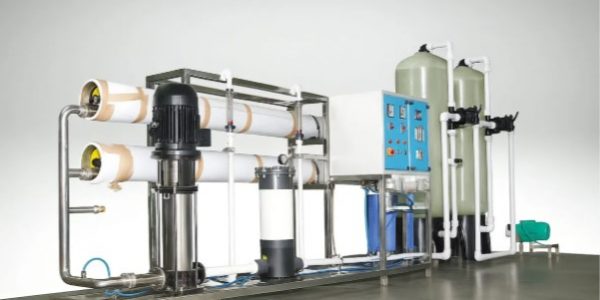
A feed pump moves raw water into the reverse osmosis pretreatment system, usually a multimedia filter, an activated carbon filter, and a softener chosen by water analysis. Dosing, a cartridge filter, and the high pressure pump follow. Then the membranes do the separating. Industrial RO membrane performance depends on how well the early stages do their job.
Benefits of an Industrial Reverse Osmosis Water Treatment Plant
An industrial reverse osmosis water treatment plant turns unpredictable feed water into steady process water. The gains show up in water quality first, process reliability second. It can also reduce dependence on purchased purified water and support consistent production standards. Proper system design helps control scaling, protect downstream equipment, and improve operational efficiency.
Improved Water Quality and Contaminant Reduction
Dissolved salts, hardness minerals, and many organics leave with the concentrate. Scale stops building on boiler tubes and heat exchangers. Rated TDS reduction for units in this class runs between 90 and 99 percent, depending on feed quality. A reverse osmosis water treatment plant also gives operators a clear health check through conductivity readings.
Industrial Applications of Reverse Osmosis Technology
Food and beverage lines, pharmaceutical preparation, boiler feed, and hydrogen production all lean on RO permeate. Coastal sites and inland plants with brackish wells use RO for industrial water desalination too. Drinking water production is another common job. Where product quality is on the line, steady industrial RO membrane performance is what buyers ask about first.
How to Choose the Right Reverse Osmosis System for Your Industry
Industrial water treatment system selection goes wrong when buyers start with price and skip the water analysis. Start with the feed instead. Consider seasonal changes in source water, future production expansion, and the required permeate quality. These factors help define proper membrane configurations, pump specifications, and pretreatment needs.
Water Quality, Treatment Capacity, and System Requirements
Get a recent lab report showing TDS, hardness, turbidity and silt density. Ask how much total dissolved solids (TDS) removal your process needs to, since boiler feed and food processing set different limits. Next define the output you need and the daily volume. Industrial RO system capacity should cover peak demand with margin, not just the average.
Energy Efficiency, Maintenance, and Operating Costs
Pumping at pressure is the main power draw, so RO system energy consumption climbs with feed salinity and operating pressure. Upkeep is the other recurring item. Leave room around the skid so industrial RO system maintenance never means dismantling pipework. The main selection criteria, in short, are these.
- Feed water quality
- Peak capacity
- Pretreatment needs
- Energy requirements
- Maintenance access
Reverse Osmosis Plant Cost: What Factors Affect the Price?
Quotes vary because every site starts with a different feed and a different target. Reverse osmosis plant cost depends on a handful of choices you control. Site conditions, automation levels and local installation requirements can also influence the initial investment. Comparing these details across supplier quotations helps identify the actual cost of meeting your treatment targets.
Equipment, Installation, and Pretreatment Costs
Equipment leads the budget, meaning membranes, pressure vessels, pumps, the skid, and controls. A high-capacity reverse osmosis system needs larger pumps and more vessels, so that line grows quickly. Pretreatment gets underestimated because a tougher feed needs more filtration, softening, or dosing, and that moves the reverse osmosis plant cost before any permeate is made.
Long-Term Operating and Maintenance Expenses
Reverse osmosis plant operating costs run for the life of the unit and catch out buyers who compare only purchase prices. A higher water recovery rate in RO systems cuts feed water use but raises scaling risk, so cleaning gets more frequent. Separating the two kinds of spend keeps every reverse osmosis plant cost comparison honest.
Why Choose Hinada Water Treatment for Industrial RO Solutions?
At Hinada Water Treatment we manufacture membrane and water treatment systems in Guangzhou, such as RO systems, ultrafiltration systems, MBR systems, and dissolved air flotation systems. However, the choice of the right system will depend on the analysis of the water at the location where the plant will be installed, as well as the production goals.
Customized Water Treatment Solutions for Industrial Needs
Each unit in the RO Water Treatment System range is configured based on a feed water analysis. The standard package covers pretreatment filters, a cartridge filter, a cleaning skid, a high pressure pump, and membranes. Capacity starts at 100 liters per hour and climbs to 100 cubic meters per hour. At the top of that range, a high-capacity reverse osmosis system serves large industrial loads.
Request a Consultation for the Right RO System
To get a proper proposal, send source water quality, intended water use, local power voltage and frequency, and required capacity per hour or per day. That turns industrial water treatment system selection into a short, concrete conversation. Sites that must also treat their own effluent can raise MBR Wastewater treatment in the same call. Then use the contact page to request a consultation.
Conclusion: Find the Right Industrial Reverse Osmosis System with Hinada Water Treatment
Choosing an industrial reverse osmosis water treatment plant comes down to honest answers about your water, your volume, and your budget over time. Test the feed, size for peak demand, and plan pretreatment properly. Price RO system energy consumption and upkeep alongside the purchase. Once those inputs are on paper, the decision becomes a specification you can compare line by line. Share them with the team and ask for a consultation on the right reverse osmosis system for your site.
Explore More Blog: https://www.hinada.com/how-to-calculate-the-required-membrane-area-for-membrane-bioreactor
Frequently Asked Questions (FAQs)
Q: What is reverse osmosis used for in industrial water treatment?
A reverse osmosis water treatment plant supplies low TDS water for boiler feed, food processing, and pharmaceutical preparation. Typical feeds include tap water and brackish wells. It also supports industrial water desalination when only seawater is available.
Q: How do I choose the best reverse osmosis system?
Start with a feed water analysis. Then match industrial RO system capacity, pretreatment, and energy use to your process.
Q: How much does an industrial reverse osmosis water treatment plant cost?
Prices depend on capacity, feed water, pretreatment, and site work, so no single number exists. Ask for reverse osmosis plant operating costs too, and base the quote on a water analysis.
Q: What factors affect reverse osmosis plant cost?
Capacity, feed quality, pretreatment, materials, installation, and power needs all move the reverse osmosis plant cost.
Q: What pretreatment is required for an industrial RO system?
A reverse osmosis pretreatment system usually combines multimedia filtration, activated carbon, a softener or dosing, and a cartridge filter, sized from your water analysis.
Q: How often does an industrial reverse osmosis system need maintenance?
Industrial RO system maintenance follows the readings more than the calendar. Operators check pressure and flow daily, clean membranes when readings drift, and replace them when cleaning stops working.