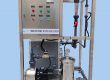
Pure water sounds simple until a plant needs it at a steady, measured quality every hour of every day. That is where Electrodeionization Purified Water earns attention. Instead of regenerating spent resin with acid and caustic, an EDI unit uses electricity to keep pulling dissolved ions out of the stream. Your feedwater, flow rate and target purity shape the right choice, and this guide walks through each.
What Is an Electro Deionization (EDI) System?
Think of it as a polishing step. Water that has already passed through reverse osmosis enters chambers filled with resin, and a direct current pulls the remaining ions out. Buyers meet Electro Deionization (EDI) Systems beside RO skids, because the two usually work as a pair. This system reduces dissolved ionic impurities while supporting continuous high-purity water production for industrial processes.
How Does an EDI Water System Work?
Feedwater flows between ion exchange membranes packed with resin beads. The beads grab charged particles such as sodium, chloride and silica. An electric field then drives those ions through the membranes into concentrated channels, and a small reject stream carries them away. The current also splits some water into hydrogen and hydroxide ions, so the resin regenerates itself while the unit runs. A continuous electrodeionization system never stops for chemical regeneration.
How Does EDI Produce High-Purity Electrodeionization Water?
Pretreatment does the heavy lifting first. Reverse osmosis removes most dissolved solids, so the EDI stage only polishes what remains. The result is electrodeionization purified water with very low conductivity, though the exact figure depends on feedwater and configuration. Most plants pair the module with RO in an RO-EDI water treatment system.
Key Benefits of EDI Systems for Industrial Water Purification
Buyers rarely pick EDI for novelty. They pick it to escape the regeneration cycle and the chemicals that come with it. Beyond purity, EDI helps plants simplify chemical handling, reduce regeneration downtime, and maintain predictable water quality across demanding production schedules. These benefits support operational efficiency and reduce routine chemical waste.
Consistent Water Quality and Reduced Chemical Usage
A conventional industrial deionized water system with mixed beds drifts as the resin exhausts, then swings back after regeneration. EDI avoids that sawtooth because regeneration happens constantly inside the module. Operators watch EDI system water through an inline conductivity meter, so drift shows early. Acid and caustic deliveries shrink, and so does neutralization work. For plants chasing steady electrodeionization purified water, that stability matters as much as the purity number.
Continuous Operation and Lower Maintenance Requirements
With no regeneration downtime, the unit can run around the clock. Fewer valves cycle. Maintenance centers on pretreatment checks, periodic cleaning and eventual module replacement. Look, no system is maintenance-free. Still, EDI membrane technology swaps a heavy chemical routine for a lighter one.
EDI for Pharmaceutical Industry Applications
Drug makers need water they can document and repeat. Purified water feeds formulation, cleaning and many production steps. Teams exploring EDI for Pharmaceutical Industry Applications usually begin with the quality standard they must meet. Its continuous operation supports repeatable water quality, helping pharmaceutical facilities maintain consistent production processes and documented quality control.
Why Is EDI Used for Pharmaceutical-Grade Water?
Pharmacopoeia standards for purified water set limits on conductivity and total organic carbon. EDI supplies steady, low ionic content, so the plant gets electrodeionization-purified water without regenerant carryover. Microbial control still depends on sound design, sanitization and storage. A buyer weighing EDI for pharmaceutical industry application should confirm the exact grade with the quality team before sizing anything.
Key Water Quality Requirements for Pharmaceutical Applications
Requirements vary by product, region, and dosage form. Purified water and water for injection carry different expectations, and EDI alone satisfies neither. A high-purity water purification system usually combines filtration, softening, RO, EDI and sanitizing steps. Define conductivity, organic carbon and microbial limits first.
How to Choose the Right EDI System for Your Industry
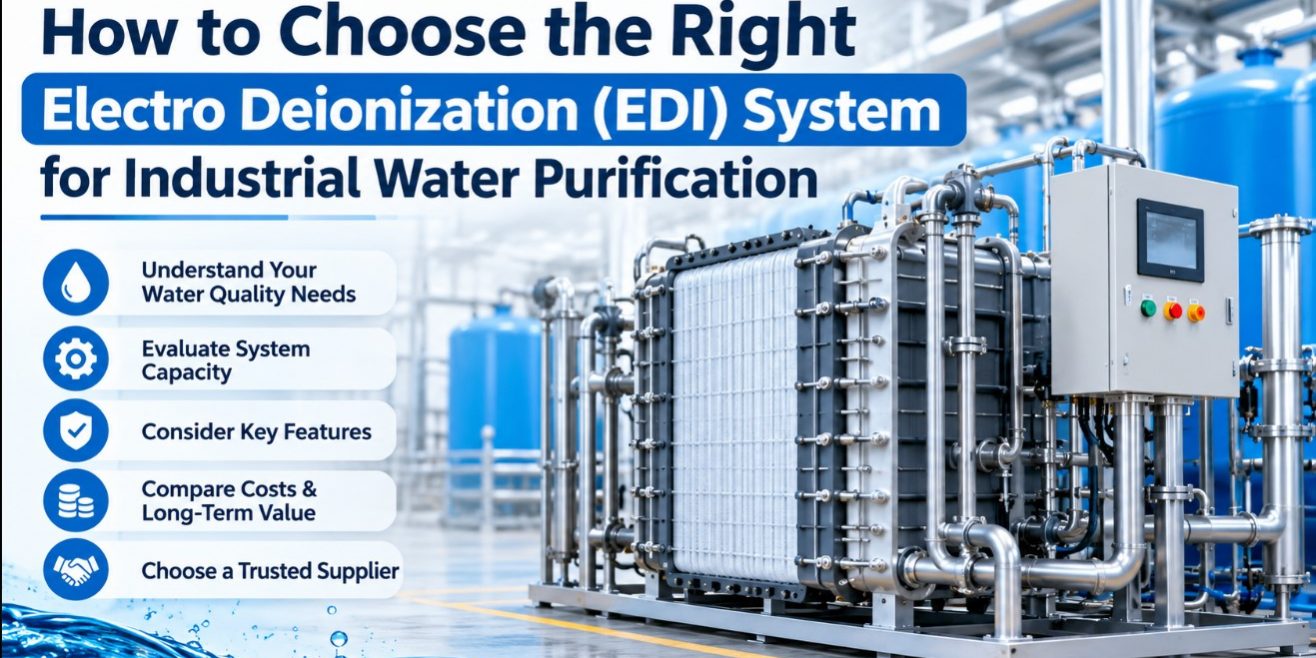
No two plants share the same water problem. Start with data, not brochures, and tie every industrial water purification equipment decision to measure numbers. Consider the available installation space, utility connections, automation requirements, and compatibility with existing treatment equipment before finalising the system design.
Water Quality, Flow Rate, and System Capacity
Get a full feedwater analysis covering conductivity, hardness, silica, carbon dioxide and chlorine. EDI modules have limits for each, and exceeding them shortens stack life. Next, set peak flow and the output quality you must hold. Avoid oversizing, because modules run best near design flow. An ultrapure water treatment system is only as good as the data behind its design.
Pretreatment, Operating Costs, and Maintenance Requirements
Pretreatment protects the stack that handles your EDI system water, so budget for it from day one. Use this short checklist when comparing quotes.
- Feedwater quality, including hardness, chlorine and carbon dioxide
- Required output, meaning conductivity plus any organic or microbial limits
- System capacity, covering peak flow and future growth
- Ongoing operating requirements, such as power, reject water, cleaning and module replacement
Why Choose Hinada Water Treatment for EDI Solutions?
The company is a Guangzhou-based manufacturer whose range includes EDI modules, industrial reverse osmosis, ultrafiltration plants and wastewater equipment. RO and EDI from one supplier simplifies a paired design. By evaluating equipment compatibility, technical support, and project requirements, buyers can select a solution that meets their facility’s long-term operational needs.
Selecting an EDI System Based on Your Industrial Water Needs
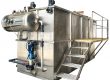
The team supports projects from solution design through installation, operator training and after sales service. It can specify electrodeionization equipment alongside RO pretreatment so both stages are designed as one package. Buyers comparing Electro Deionization (EDI) Systems should bring their feedwater data, target quality and flow. Plants that also treat effluent can review Wastewater Treatment Systems, and oily or fatty streams may suit a DAF System for industrial wastewater treatment.
Request a Consultation for the Right Water Purification Solution
Send Hinada Water Treatment your feedwater analysis, required output quality, flow rate and operating conditions. With that information, engineers can discuss whether an electrodeionization water treatment system or a different route fits your plant. Contact details are on the website contact page.
Conclusion: Find the Right EDI Water Purification Solution with Hinada Water Treatment
Choosing well comes down to a few honest questions. What does your feedwater look like today? What quality must leave the unit, and at what flow? Answer those, then plan pretreatment and upkeep around them. EDI water purification technology can deliver steady Electrodeionization Purified Water when it is sized and protected properly. A short consultation, backed by real water data, saves months of guesswork.
Frequently Asked Questions (FAQs)
Q: What is an EDI system used for?
It polishes RO permeate into high purity water for pharmaceutical, power and electronics uses, without chemical regeneration. The output is Electrodeionization Purified Water.
Q: How does an electrodeionization water system work?
Resin and ion exchange membranes capture dissolved ions. An electric current moves them into a reject stream and regenerates the resin continuously.
Q: What is the difference between EDI and reverse osmosis?
RO uses pressure and a membrane to remove most dissolved solids. EDI uses electricity and resin to polish what remains. Most plants use both.
Q: Why is EDI used in the pharmaceutical industry?
It gives steady, low conductivity water without acid or caustic regeneration. It still needs proper pretreatment, sanitization and validation.
Q: What water quality is required before an EDI system?
Feed is normally RO permeated with low hardness, chlorine and carbon dioxide. Exact limits come from the module maker, so check before ordering.
Q: How do you choose the right EDI system for industrial water purification?
Collect feedwater data, define output quality and flow, plan pretreatment and compare operating costs. Then share the numbers with a supplier for sizing.