Scale on boiler tubes. An industrial reverse osmosis system pushes feedwater through a tight membrane and leaves most dissolved salts behind. Unlike a basic industrial water filtration system, it handles dissolved ions, which opens the door to industrial water recycling solutions. This guide covers how it works, what drives cost, and how to read each industrial reverse osmosis system for sale before you request a quotation.
What Is an Industrial Reverse Osmosis System?
Reverse osmosis sounds like a lab term, yet the idea is simple. Water is forced through a membrane so tight that most dissolved salts and organic molecules cannot follow. What passes becomes product water, and the rest leaves as concentrate. Factories use this separation to control hard, salty or variable supplies. The two parts below cover the process and the main components.
How Does an Industrial RO System Work?
A pump pushes feedwater against a semipermeable membrane above its natural osmotic pressure. That is reverse osmosis membrane technology. Industrial reverse osmosis manufacturers build units for well, city, brackish and seawater supplies. Pretreatment protects the membranes, because RO membrane filtration works best when fouling stays low. Consider a reverse osmosis system industrial water treatment project as a chain, not a machine.
Key Components of Industrial Reverse Osmosis Equipment
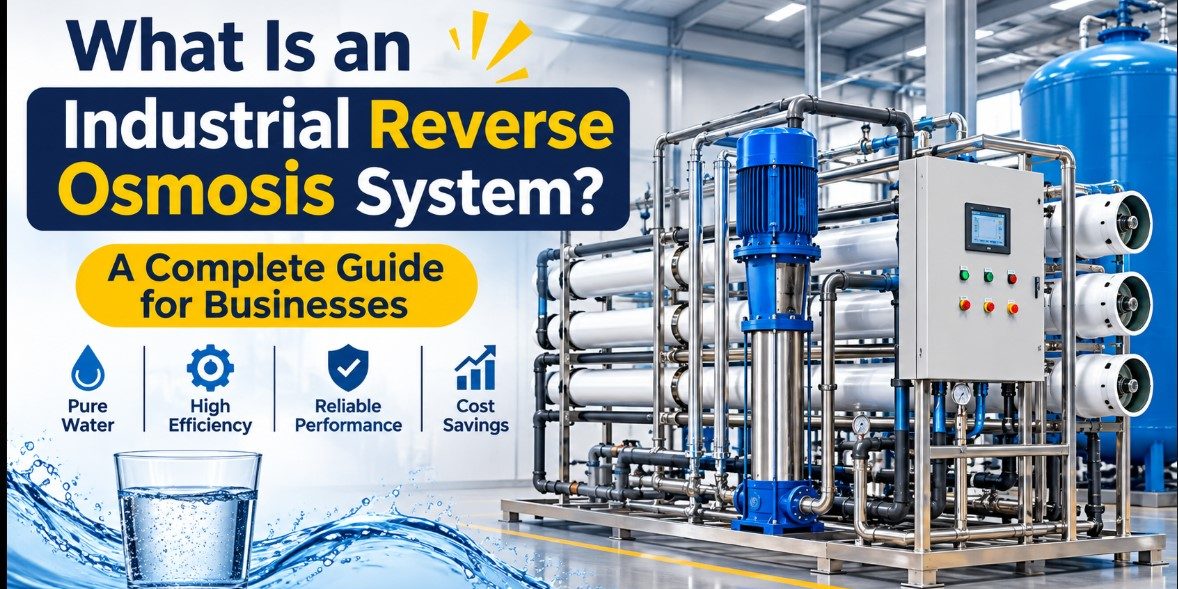
Industrial reverse osmosis equipment follows a similar flow.
- Pretreatment filters remove solids, chlorine and hardness.
- A high pressure pump drives water through the membranes.
- Membrane elements, often 8040 or 4040, do the separation.
In an RO industrial water system, an industrial water filtration system positioned beforehand decides how often membranes need cleaning. A water pretreatment system keeps those visits rare.
Benefits of an Industrial Reverse Osmosis Water Treatment System
Buyers rarely install membranes for fun. They do it because poor water quality hurts the business through scale, off-spec product or an unreliable supply. Treating water at the source can remove several of those problems at once. Below are the main gains and where they show up most. Test each one on your own site, since results depend on feedwater and operation.
Improved Water Quality and Reduced Operating Costs
Boilers and process lines face less scale, and finished products stay consistent. Permeates from an industrial RO water treatment plant can return to rinsing or cooling duties, so the plant draws less fresh water. A reverse osmosis industrial water system built for reuse fits beside industrial water recycling solutions. Good industrial water purification equipment earns its place through measured results.
Industrial Applications of Reverse Osmosis Systems
Before you shortlist any industrial reverse osmosis system for sale, match the design to the source water.
- Drinking water from borehole, city or brackish supplies.
- Food process water that needs low mineral content.
- Reuse of effluent from an industrial wastewater treatment system.
Reverse osmosis water treatment plant manufacturers usually ask about the feed first. An industrial RO water treatment plant for seawater needs tougher membranes than one for borehole water.
Industrial Reverse Osmosis System Price: What Affects the Cost?
Price is usually the first question and the hardest one to answer from a web page. Every plant is sized around its own water, flow and target quality, so a figure without those details tells you little. Do not assume the prices beforehand. The two parts below explain what moves a quote and what to prepare before asking for one.
Capacity, Water Quality, and Equipment Requirements
Ask five suppliers for an industrial reverse osmosis system price and expect five answers. Capacity drives most of it, since more flow needs bigger pumps. Hinada Water Treatment designs each unit around the client’s requirements. The scope of industrial reverse osmosis equipment moves the figure. Reverse osmosis water treatment plant manufacturers quote best after a water analysis. An industrial water treatment system quote without a design flow is hard to judge, regardless of its reverse osmosis membrane technology.
Installation and Maintenance Costs
Equipment is only part of the budget for any industrial water treatment system. Installation covers piping, electrical work and commissioning. A properly sized water pretreatment system slows fouling. Ask industrial reverse osmosis manufacturers for a maintenance schedule and spare parts list. Compare total ownership cost across the whole reverse osmosis system industrial water treatment project. RO membrane filtration holds its output when cleaning happens on schedule.
How to Choose Industrial Reverse Osmosis System Manufacturers
Two suppliers can quote the same flow rate and still deliver very different plants. The gap is in pretreatment design, membrane selection, control quality and after delivery support. Use the checks below to screen bidders first and compare offers afterwards. Procurement and engineering teams can work from the same list. Ask each bidder the same questions so the answers line up.
Key Factors to Consider Before Purchasing
The best industrial reverse osmosis system manufacturers show relevant projects. Reverse osmosis water treatment plant manufacturers also differ in testing and support. Use this list to filter bidders for any RO system industrial water treatment project.
- Experience with your feedwater and the industrial water filtration system ahead of the membranes.
- Manufacturing, assembly and testing capability.
- Installation, commissioning and training support.
Comparing Industrial RO Systems for Sale
Quotes for a reverse osmosis system industrial water treatment project rarely look alike. One industrial reverse osmosis system for sale may leave out pretreatment that another includes. Industrial reverse osmosis manufacturers also vary in membrane brand.
- Pretreatment and cleaning gear are in the industrial RO water treatment plant scope.
- Warranty, delivery time and the final industrial reverse osmosis system price.
Industrial Reverse Osmosis vs. Ultrafiltration: What’s the Difference?
Reverse osmosis and ultrafiltration often get mentioned together, and buyers sometimes treat them as rivals. Each handles a different part of the water, and plants frequently run them in sequence. Ultrafiltration retains particles, bacteria and colloids. RO goes further and removes dissolved ions. Identifying your specific problem makes choosing a solution much easier, as detailed in the two sections below.
When Should You Choose an RO or UF System?
Choose RO for dissolved salts or hardness, and ultrafiltration for suspended solids, bacteria or colloids. Many sites need both, with UF giving the reverse osmosis industrial water system a steadier feed. If dissolved solids are far above target, reverse osmosis membrane technology belongs in the design. Reverse osmosis water treatment plant manufacturers should ask for a lab report. Water from an industrial wastewater treatment system often swings, so ultrafiltration pretreatment for RO usually earns its place.
How Ultrafiltration Supports Industrial Water Treatment
Hollow fibre UF membranes act as a tight physical barrier. Placed ahead of RO, they hold back particles. A water pretreatment system keeps pressure drop low. Oily or fatty streams need earlier action, and a DAF System for industrial wastewater treatment can strip those loads first. Ultrafiltration pretreatment for RO also suits reuse projects. Strong industrial water recycling solutions often link these stages for a stable reverse osmosis industrial water system.
Conclusion: Choose the Right Industrial Water Treatment Solution
The right setup starts with your water. Test the feed first, then size industrial water purification equipment to match. Compare industrial reverse osmosis system manufacturers on support and operating costs. Ready to scope a project? Send Hinada Water Treatment your feedwater analysis, daily flow and site space through the contact page. Browse related Wastewater Treatment Systems meanwhile. Ask whether ultrafiltration pretreatment for RO fits too. A clear brief keeps your industrial water treatment system plan on track.
Frequently Asked Questions (FAQs)
Q: What is an industrial reverse osmosis system used for?
Industrial water purification equipment produces drinking, process or desalinated water.
Q: How much does an industrial reverse osmosis system cost?
The cost of an industrial reverse osmosis system depends on capacity, feedwater and scope.
Q: How do I choose reliable industrial reverse osmosis manufacturers?
Choose industrial reverse osmosis system manufacturers with relevant projects, testing and installation support.
Q: What is the difference between industrial RO and ultrafiltration?
RO membrane filtration removes dissolved salts. UF removes suspended solids and bacteria.
Q: Is an industrial reverse osmosis system suitable for wastewater treatment?
Often yes, as a polishing stage inside an industrial wastewater treatment system.
Q: Where can businesses buy industrial reverse osmosis equipment?
Look for an industrial reverse osmosis system for sale from manufacturers offering installation support.